
Paella world champion: Sueca or World Paella Day?
Two international paella competitions around València both get called the world championship. In Sueca, professional teams have been cooking the very same Paella Valenciana since 1961. At World Paella Day in the city of València, each finalist has brought their own interpretation since 2020. The titles sound alike, but the two contests measure quite different things. And one of them clearly carries more weight.
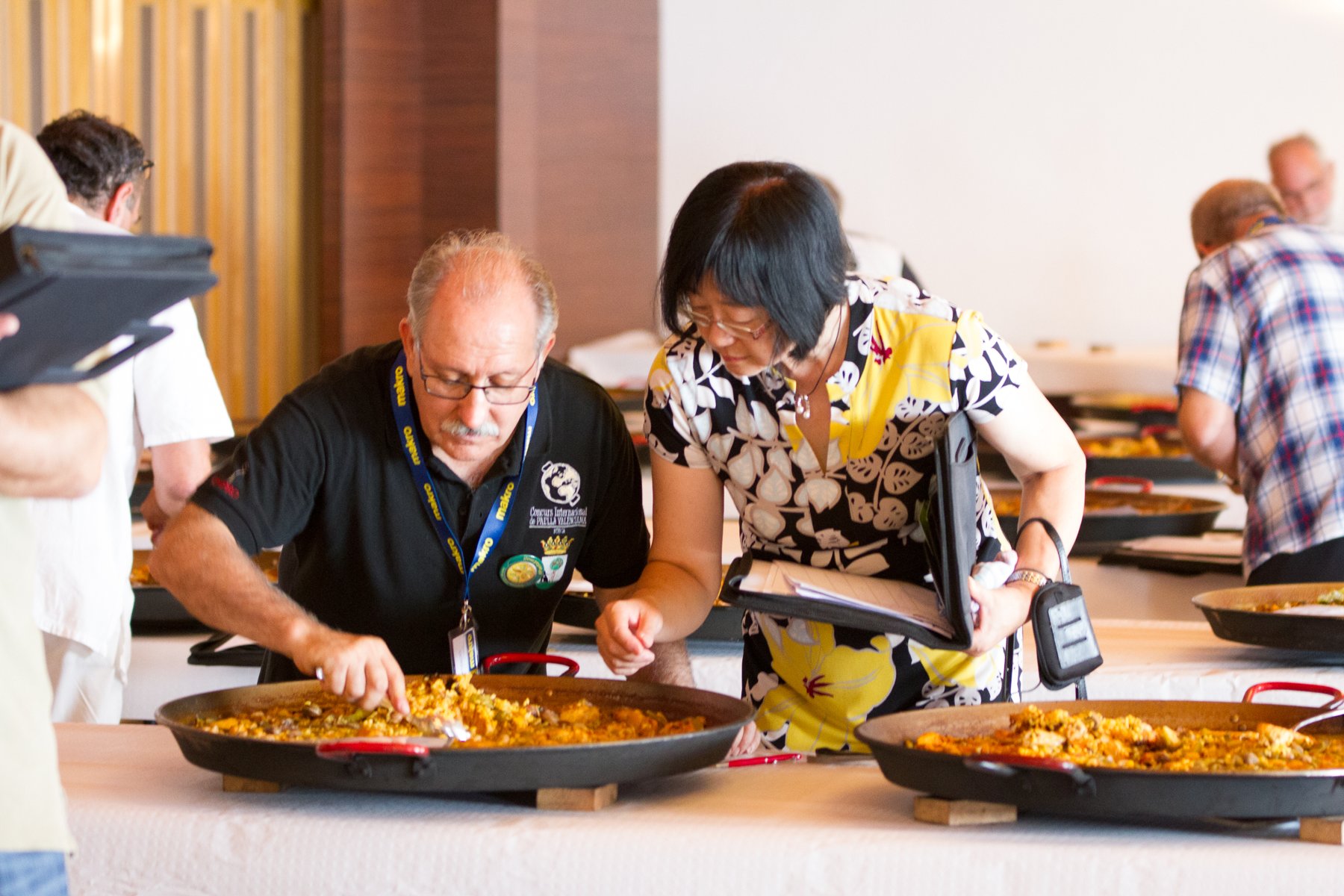
In my blog about Valencia I wrote that I got to cook in El Palmar alongside Raúl Magraner, paella world champion. When I looked into that title a little further, it turned out to be less straightforward. There are two international competitions that both go by the name of world championship: the Concurso Internacional de Paella Valenciana in Sueca and the World Paella Day Cup in València. Both take place in September, in 2026 exactly a week apart, and that year a Mexican won each of them. That is about where the similarities end.
I'll start with Sueca. Not just because it is by far the older of the two, but because it carries more authority in the paella world.
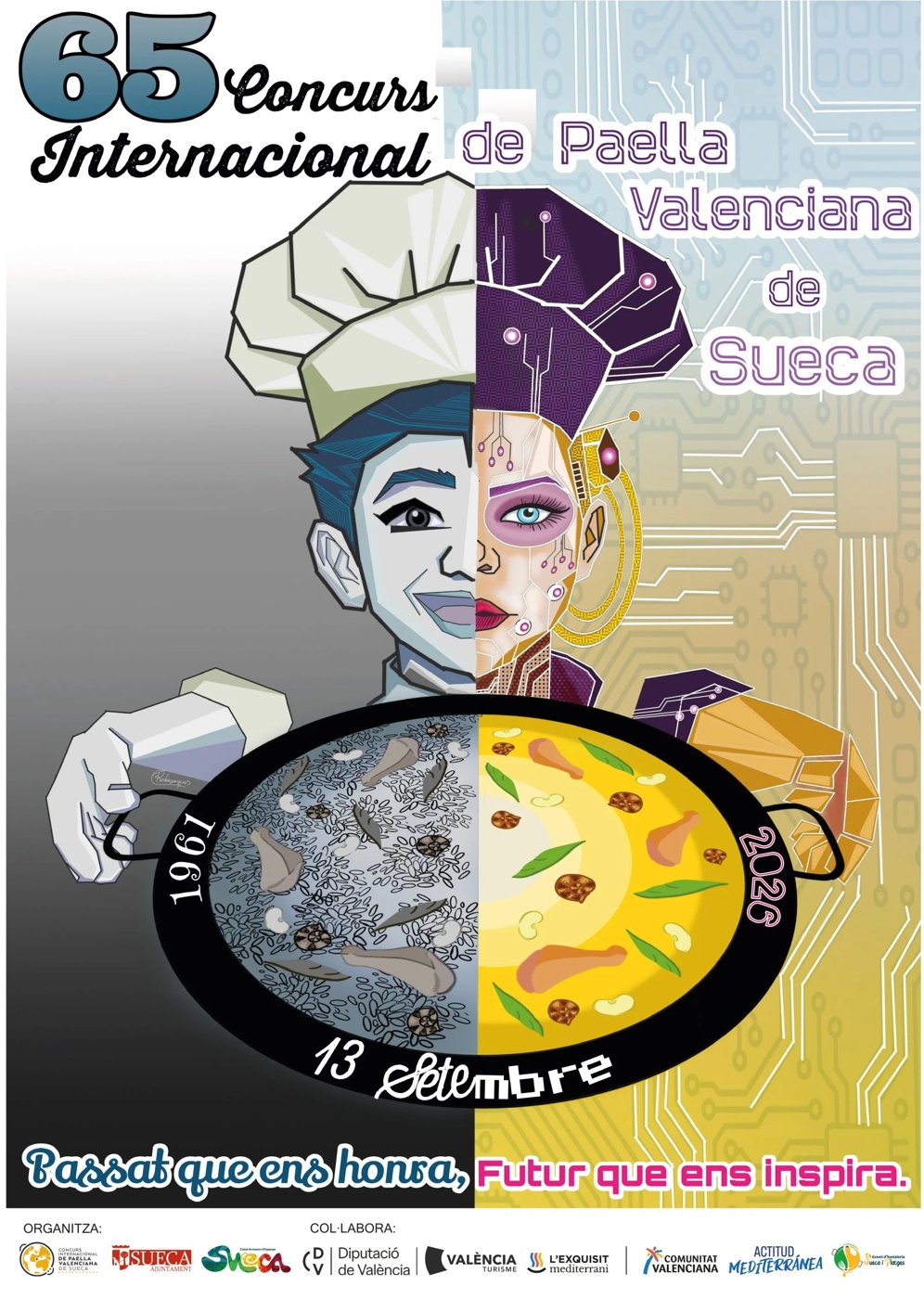
Sueca, 1961: the oldest competition
Sueca is a rice-growing town on the southern edge of the Albufera, the lagoon south of València where paella was born. The competition began in 1961, in the years when Spain was opening up to mass tourism. The mayor, Francisco Segarra Fabià, wanted a celebration built around the local rice dish, tied to the festivities for the town's patron saint, the Virgen de Sales. What started as a national fiesta del arroz for professionals and amateurs grew into a serious cooking competition. By 1974 some 1,600 people were turning up to eat.
From 1984 the contest became more professional, and in 1990 it formally opened to competitors from Europe, the Americas and Japan. That same year the official competition recipe for Paella Valenciana was laid down. The 65th edition took place in September 2026, with 40 cooks from 14 countries in the final. Getting there means coming through qualifying rounds. There are international semi-finals, in Japan among other places, and more recently a separate qualifier for the Valencia region and a national Spanish semi-final. In 2026, forty Valencian professionals competed in Castellón for twelve places in the final.
Same ingredients for everyone
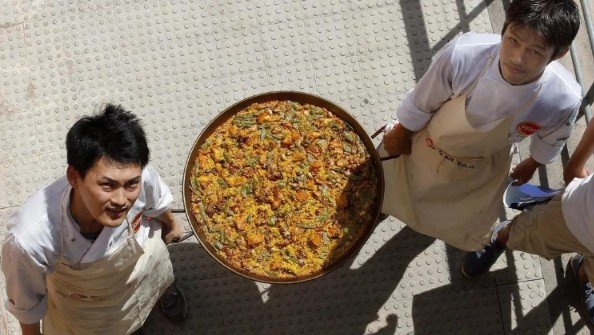
What sets Sueca apart is the format. Every team gets the same brief: the official Paella Valenciana. For 2026 the ingredients were fixed: 1,500 grams of D.O. Arroz de València rice, olive oil, one chicken, one rabbit, vaquetas (small snails), garrofó beans, flat green beans, tomato, garlic, sweet paprika, saffron and salt. Even the water is specified: tap water from Sueca.
So a clever recipe won't get you anywhere. The difference lies entirely in the execution: how far you brown the meat, how you build the sofrito, how much flavour you draw into the stock, how you manage the fire, when the rice goes in, how much liquid evaporates and whether a proper socarrat forms on the bottom. Those are exactly the steps I describe in my step-by-step blog. That is why I find Sueca so interesting as a cook: it compares technique, not ideas.
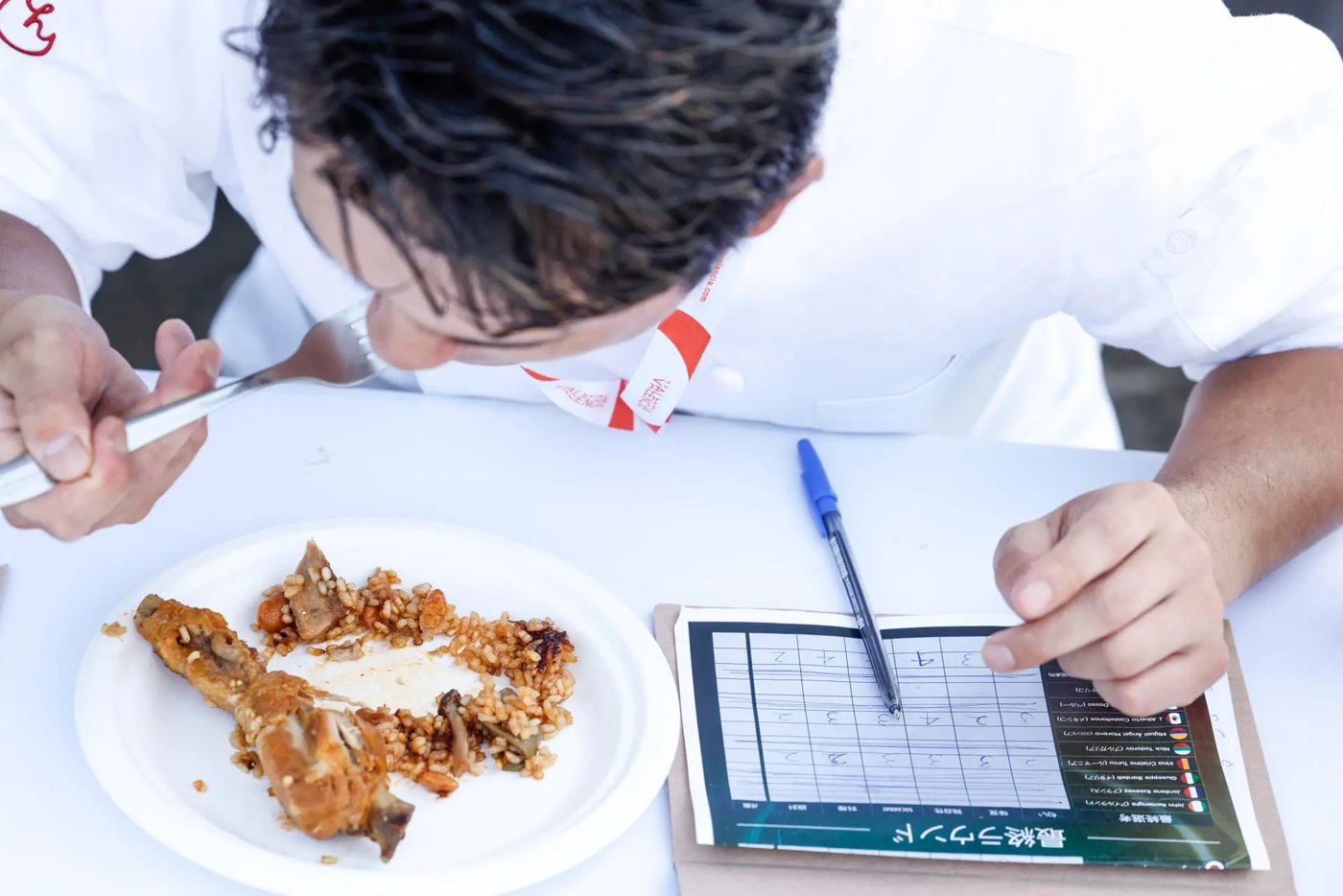
The jury is made up of chefs, food experts, people from the restaurant trade and the rice sector, and often former winners. Since 2021 a notary has been involved in the judging. The paellas reach the jury in several rounds, so that each pan is tasted as fresh as possible.
From Havana to Tlaxcala
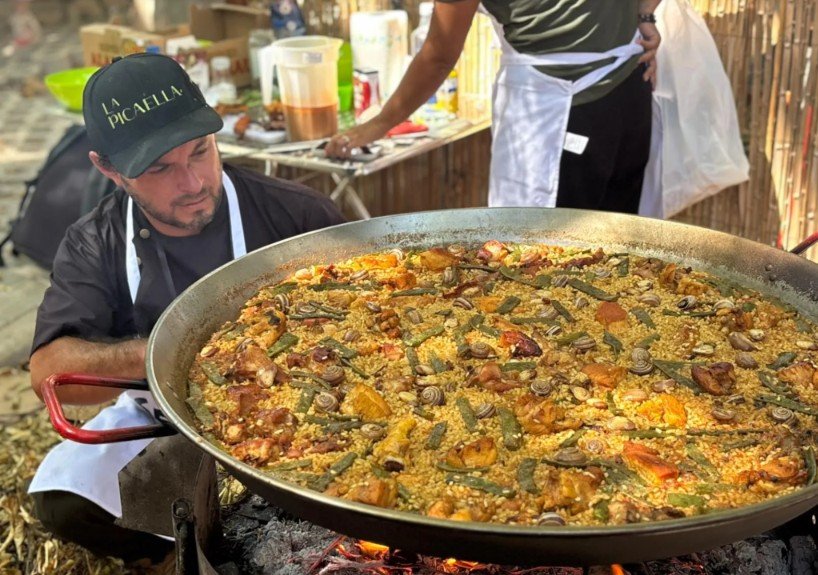
You might expect the best Paella Valenciana to come from Valencia. Sueca's list of winners tells a different story. In 1996 and 1998 the prize went to Hostal Valencia in Havana. In 2012 it went to Ba-ba-Reeba in Las Vegas. Crocus from Mexico won in 2022, Sabor Amar Paellas from Quito, Ecuador, in 2025, and in 2026 another Mexican restaurant: Burguettos from Apizaco in the state of Tlaxcala, with José Carlos Ruiz Zamora and Lionel Caldelas at the pan.
That says something about the competition. If you master the technique, you can win in Sueca wherever you come from. It also says something about how seriously Paella Valenciana is taken outside Spain. Burguettos is not a Spanish restaurant in Mexico but a Mexican restaurant that has made the classic recipe its own.
The winners receive 2,500 euros, a certificate and, since 2025, a silver medallion. The medallion passes from winner to winner: the previous champion travels to Sueca to hand it over in person, and the new one keeps it for a year.
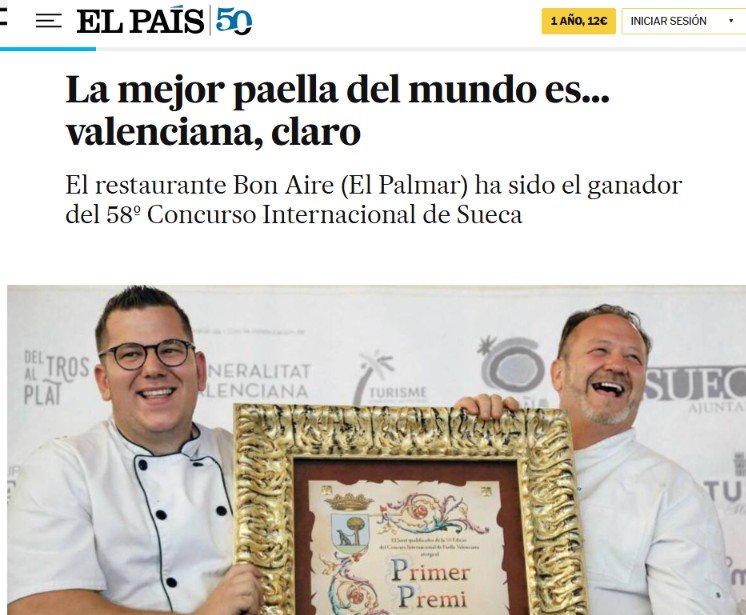
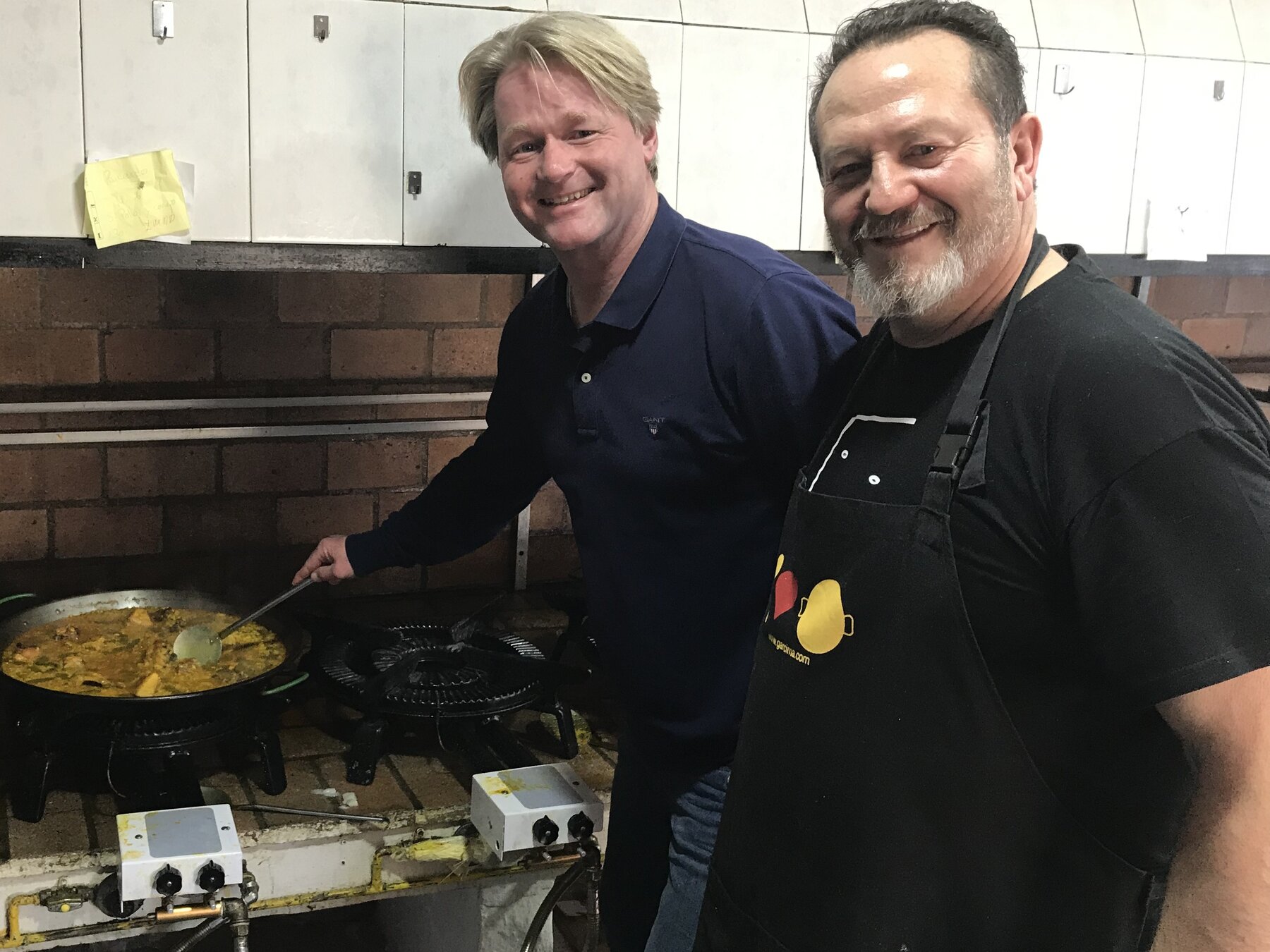
Raúl Magraner and Bon Aire, 2018
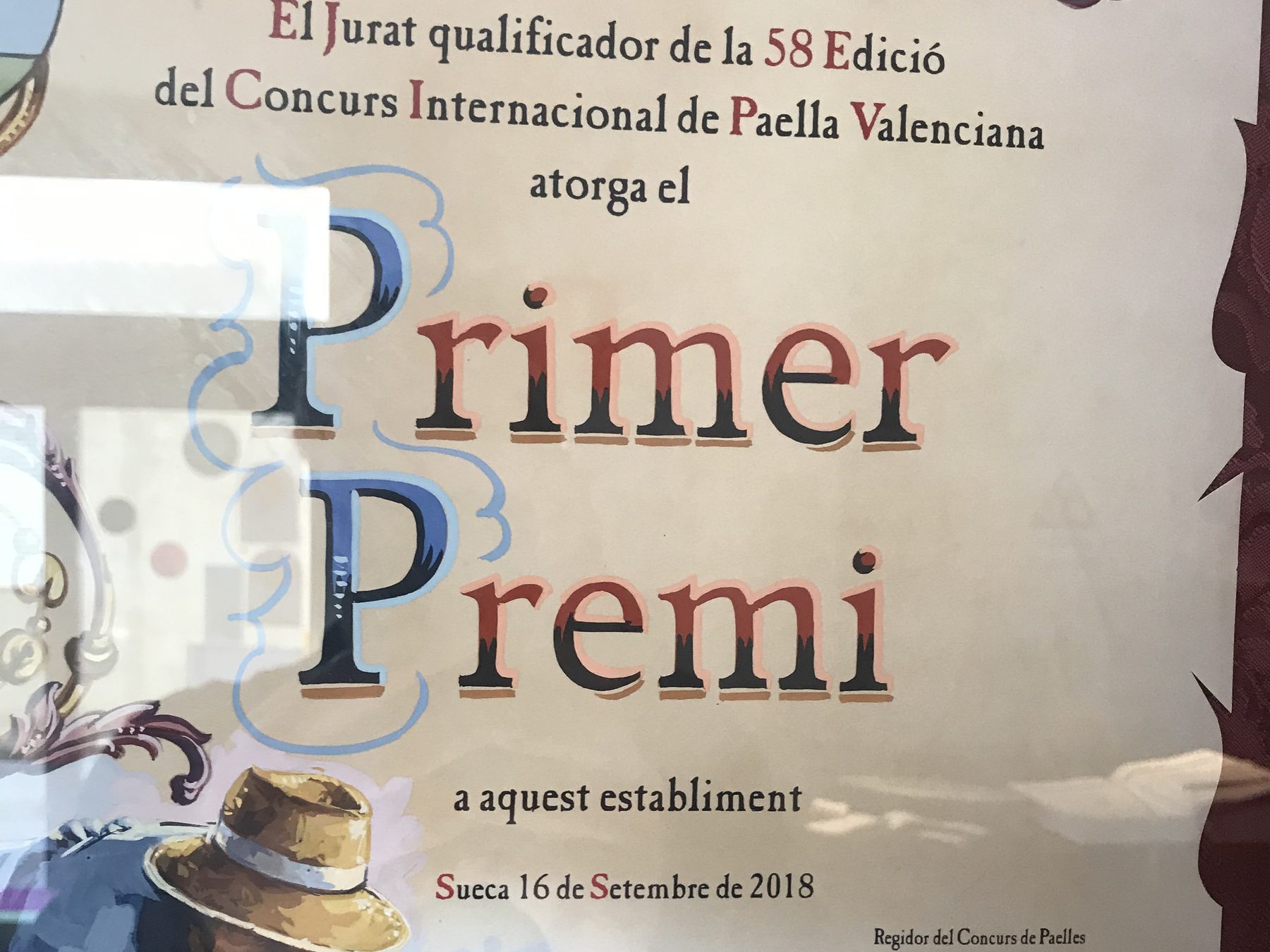
For me, Sueca is tied to one name. In 2018 Restaurante Bon Aire from El Palmar won the 58th edition, with Raúl Magraner and his son Jordi at the pan. Forty finalists took part; Bon Aire finished ahead of Monastrell from Alicante and Casa Granero from Serra. Magraner later compared Sueca to the Champions League. When I stood in his kitchen, the certificate was hanging on the wall. I wrote about that visit in my blog Visiting Valencia.
Strictly speaking, then, Raúl Magraner won the international paella competition in Sueca, not World Paella Day; that contest did not yet exist in 2018. But he has been involved with both. In 2019 he travelled to Japan as head of the jury for Sueca's Japanese semi-final, and in 2024 he sat on the jury of the World Paella Day Cup. In that sense he is a bridge between the two.
World Paella Day: a young competition
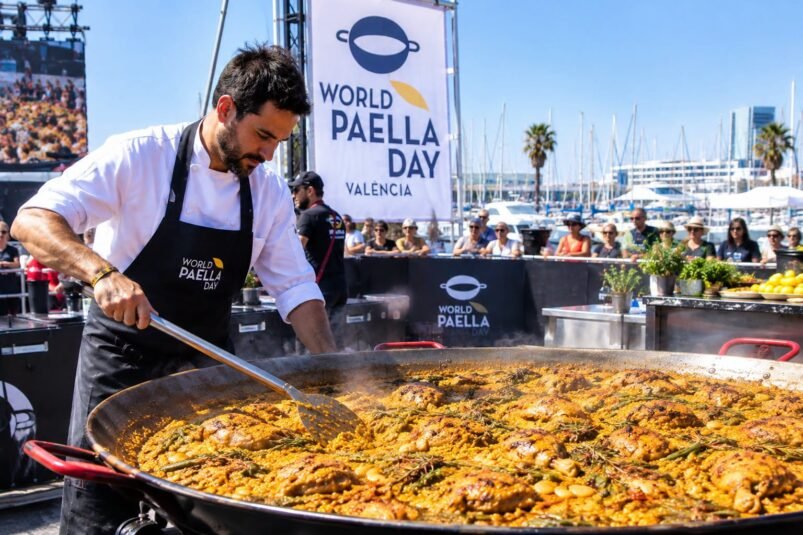
The other competition is much more recent. World Paella Day has been celebrated every 20 September since 2018, around the time of the rice harvest. In 2020 the city of València added a cooking contest, the World Paella Day Cup. It is run by Visit València together with, among others, the D.O. Arroz de València, hospitality associations and, interestingly, the Sueca competition itself. The first final was held in the middle of the pandemic, without a normal audience, in the Mestalla football stadium. Spain beat Italy, with Chabe Soler of La Ferrera in Pinedo cooking a traditional Paella Valenciana in the final.
Since 2022 Spain no longer competes as a country and acts mainly as host. The thinking behind the Cup is different from Sueca's: paella as a dish that can take on its own form anywhere in the world. Each finalist represents a country and cooks their own paella. The event doubles as a showcase for the city, with a public celebration by the harbour and paella for anyone who drops by.
The road to València
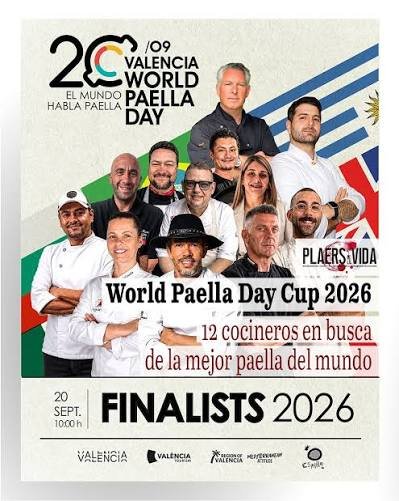
The selection process has changed considerably over the years. In the early editions, submitted videos, public votes and a jury all played a part. Since 2025 there have been in-person qualifiers across Europe, the Americas and Asia. In 2026 twelve finalists from twelve countries came to València, including, for the first time, a chef from England. No more than one finalist per country goes through.
The rules for the 2026 final were a 60-centimetre pan, a gas burner and two hours of cooking time. The rice had to be a Valencian variety; the recipe was up to the cook. According to the Japan Paella Association, which sent a competitor, a classic Paella Valenciana was in fact not allowed. The jury looks at flavour, the texture of the rice, balance and technique, and at whether the dish respects the essence of paella.
Before the final, the competitors spend a few days getting to know the area: the Albufera, the market gardens around the city, the rice and the Valencian way of making paella. Learn the source first, then tell your own story. The video shows how the 2026 final unfolded.
Duck, orange and chiltepín
The list of World Paella Day winners reads like a tour of different kitchens. In 2021 Noelia Pascual from Elche won with an Alicante-style paella of rabbit and mountain snails. In 2022 the Frenchman Éric Gil won with confit duck and mushrooms, and in 2023 Kohei Hatashita from Kyoto, Japan, with duck, orange and leek. In 2024 the prize went to Joe Padilla from Puerto Rico, and in 2025 back to France, to Frédéric Gallego, for a dry rice with Jerusalem artichoke.
The 2026 winner was Froilán Mújica, a Venezuelan living in Mexico, where he runs the rice project Arroz Lobito. His Arroz de la nostalgia combined Valencian rice technique with, among other things, Venezuelan ají dulce and Mexican chiltepín, a small, fiery chilli. Keisuke Mutsuura from Japan came second and Hugo Andrade from Ecuador third.
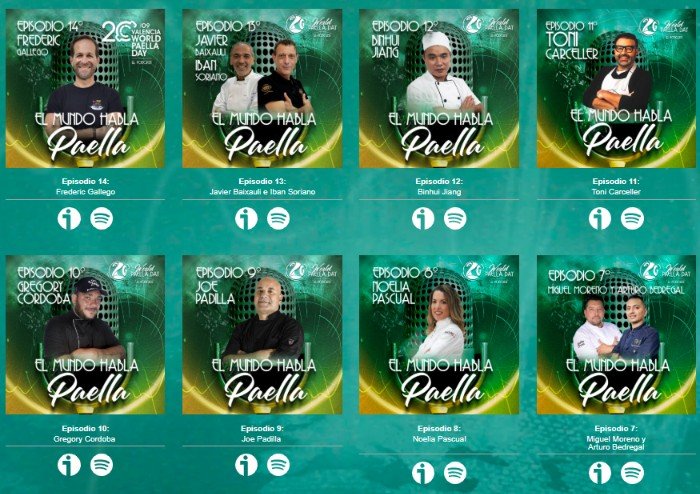
So in September 2026 Mexico won both of Valencia's big paella competitions within a single week, with two different cooks and two opposite briefs. Burguettos won Sueca by executing the classic recipe as well as it can be done; Mújica won World Paella Day with a dish in which you could taste where he comes from. If you'd like to hear from the finalists themselves, they talk about their paellas on the Spanish-language podcast El Mundo Habla Paella.
Which title counts for more?
So when someone calls themselves a paella world champion, it is worth asking which competition they mean. Both are serious, but they reward different things. World Paella Day is young, international and good for paella's profile around the world. It is a contest between countries in interpretation: Valencian technique is the foundation, and each chef builds a dish of their own on top of it.
Sueca is an exam. The competition is 65 years old, the competitors are professionals who have to qualify through earlier rounds, and everyone cooks the same dish from the same ingredients. There is no hiding behind an original idea. That is why a win in Sueca carries the most weight among paelleros, and why the 2018 certificate hangs on the wall at Bon Aire. If I have to choose, I choose Sueca. It tests what matters to me: making a classic Paella Valenciana as well as it can be made.
Finally, the Netherlands. As far as I have been able to check the lists of finalists and winners, the Netherlands has never had a finalist in either competition. England had its first in 2026. Perhaps it is only a matter of time.
Want to make a classic Paella Valenciana yourself?
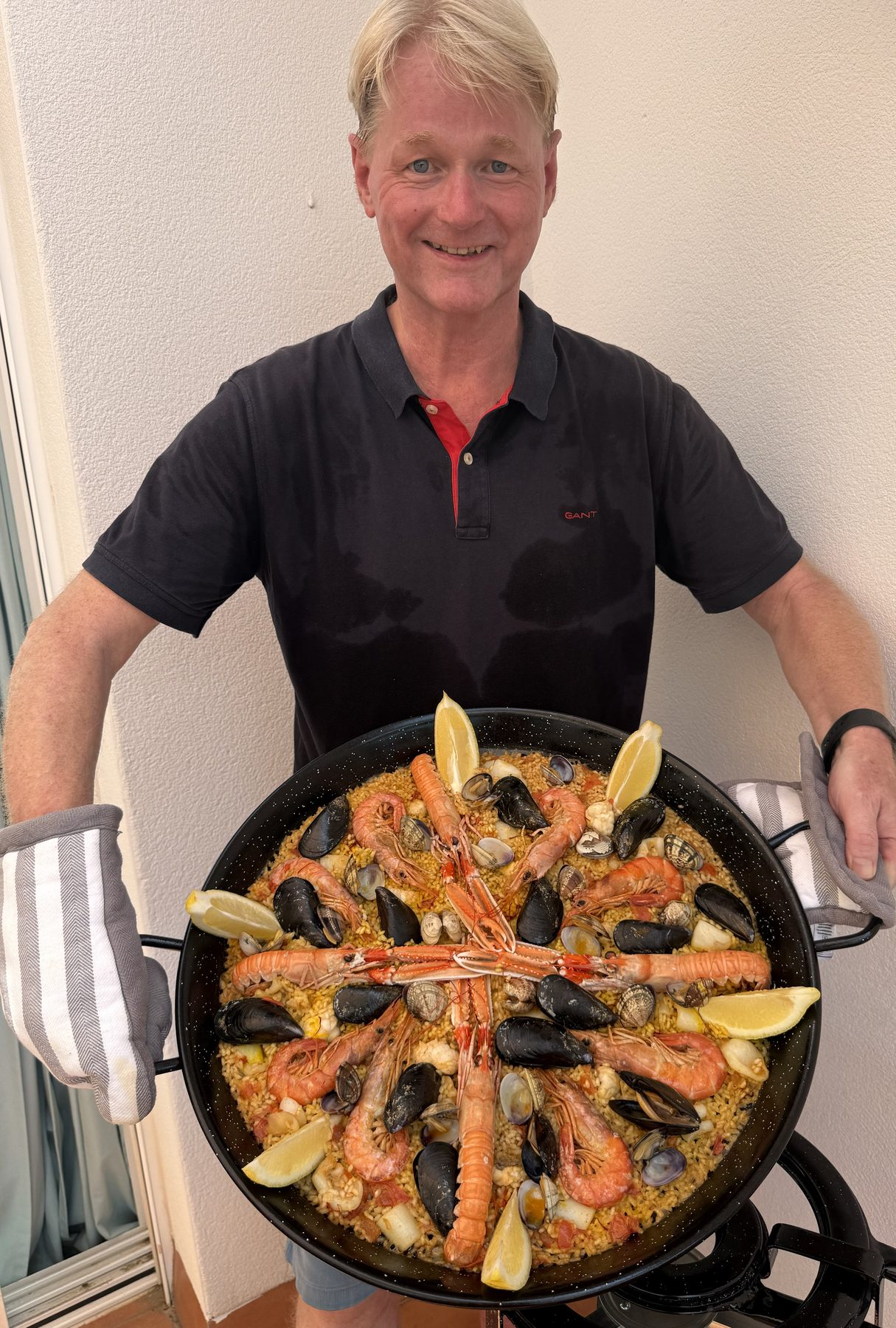
In my step-by-step blog I show how I make Paella Valenciana, the dish cooked in Sueca. With the calculator you can work out how much rice and which pan you need for your guests.
Sources
- Concurso Internacional de Paella Valenciana de Sueca — Historia
- Concurso Internacional de Paella Valenciana de Sueca — Guanyadors
- Concurso Internacional de Paella Valenciana de Sueca — Semifinals
- Concurso de Sueca — Bon Aire, mejor paella valenciana 2018
- Sueca Turisme — Concurso Internacional de Paella Valenciana
- El Periódico — La receta del 65 Concurso Internacional de Sueca
- Europa Press — Burguettos gana el 65 Concurso de Sueca
- Directo al Paladar — Un restaurante de México gana en Sueca
- Restaurante Bon Aire, El Palmar
- World Paella Day
- World Paella Day Cup 2026 — Reglement
- Ayuntamiento de València — World Paella Day 2026
- Ayuntamiento de València — World Paella Day 2024
- Japan Paella Association — World Paella Day Cup 2026
- Europa Press — Chabe Soler gana la primera World Paella Day Cup
- Primicias — Hugo Andrade, tercer lugar en el World Paella Day 2026
- Travel Extra — World Paella Day 2026 finalists