
Paella Valenciana – step by step
Chicken, rabbit, vegetables, rice, saffron and, above all, the right technique. Here in Spain I made an authentic but simple Paella Valenciana. As a little taster, I'll show you step by step how I made it.
First, the shopping
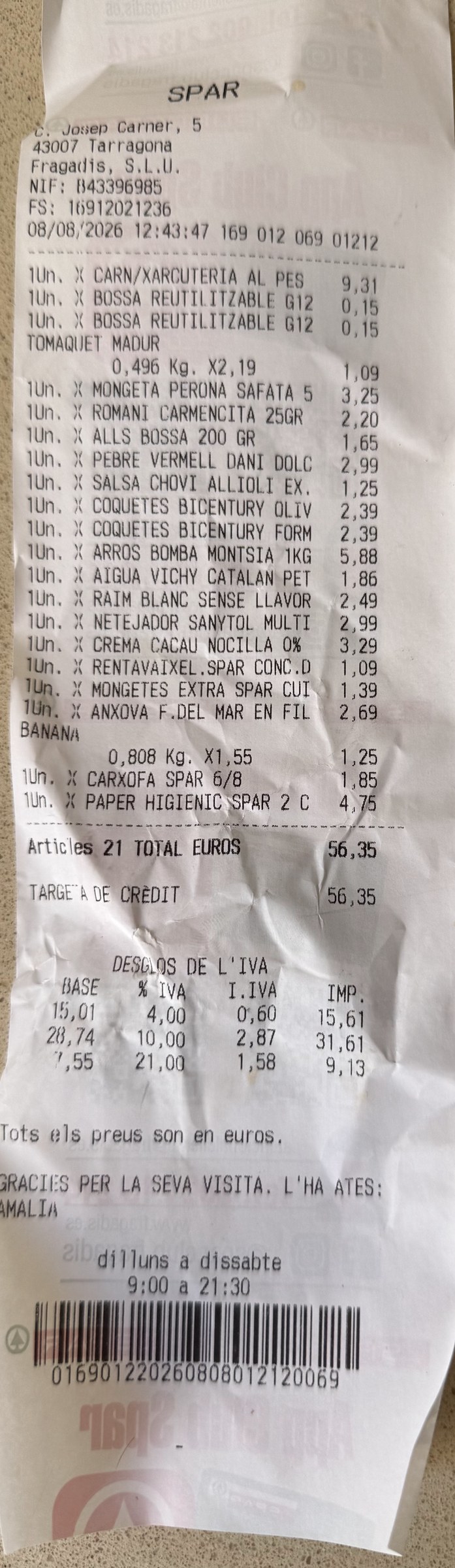
I wanted to keep things simple today, so I just went to the local Spar here in Tarragona.
The ingredients for this paella for at least four people cost me only about €25 in the end. So around €6.25 per person. Good food doesn't have to be expensive, although I must admit that prices in Spain are quite a bit lower than in the Netherlands. You'll also spot a few other items on the receipt, such as dishwasher tablets, etc. Unfortunately… not all the money can go on good food. 😉
The butcher cut the half rabbit and the chicken into nice pieces for me straight away. On the bone, as it should be.
Preparing everything
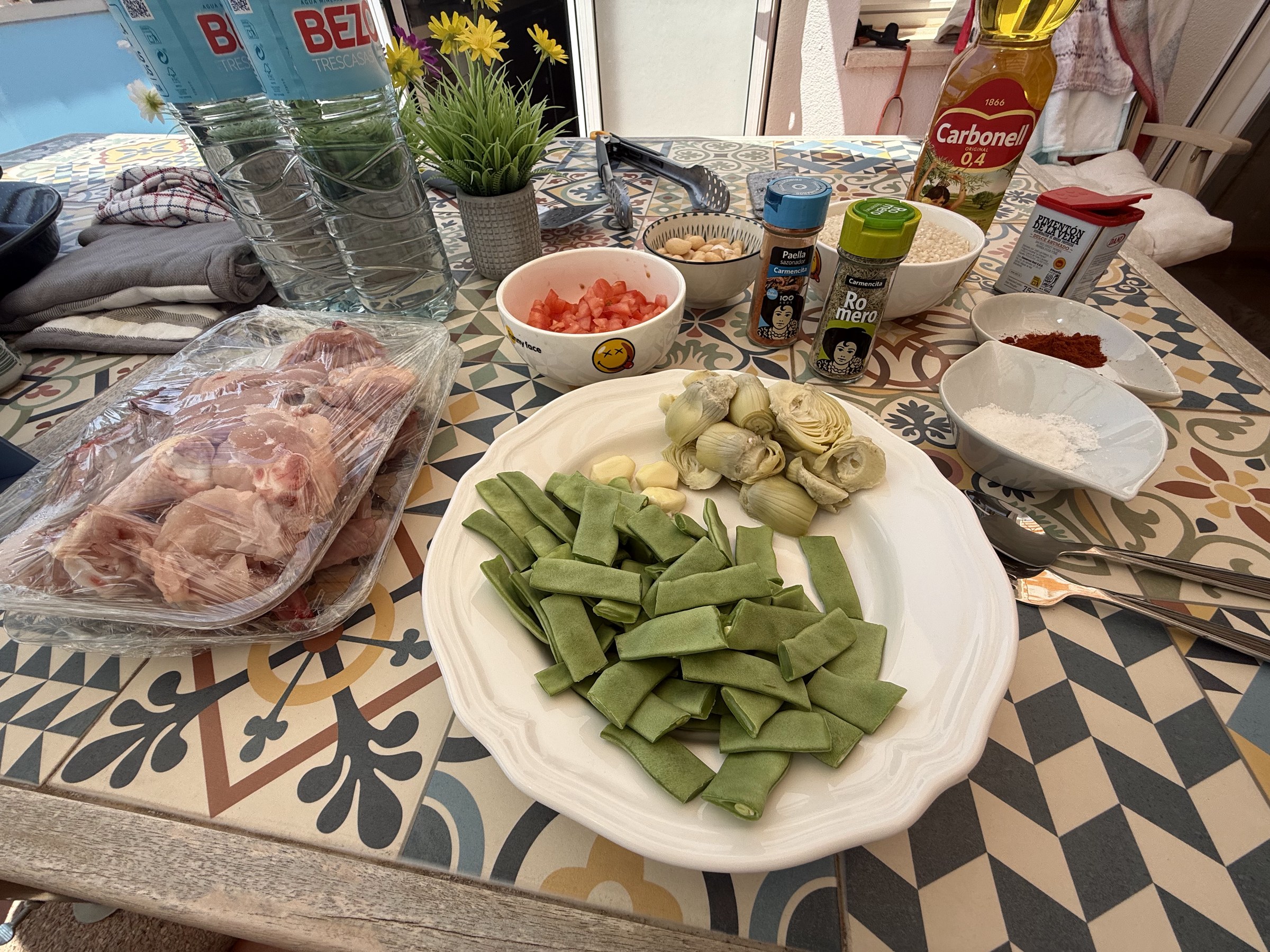
First, everything laid out, washed and chopped. Good preparation makes things a lot easier later on.
While the paella is on the fire, I only want to concentrate on the right timing and have time to chat with friends and family.
And of course: a beer for the cook.
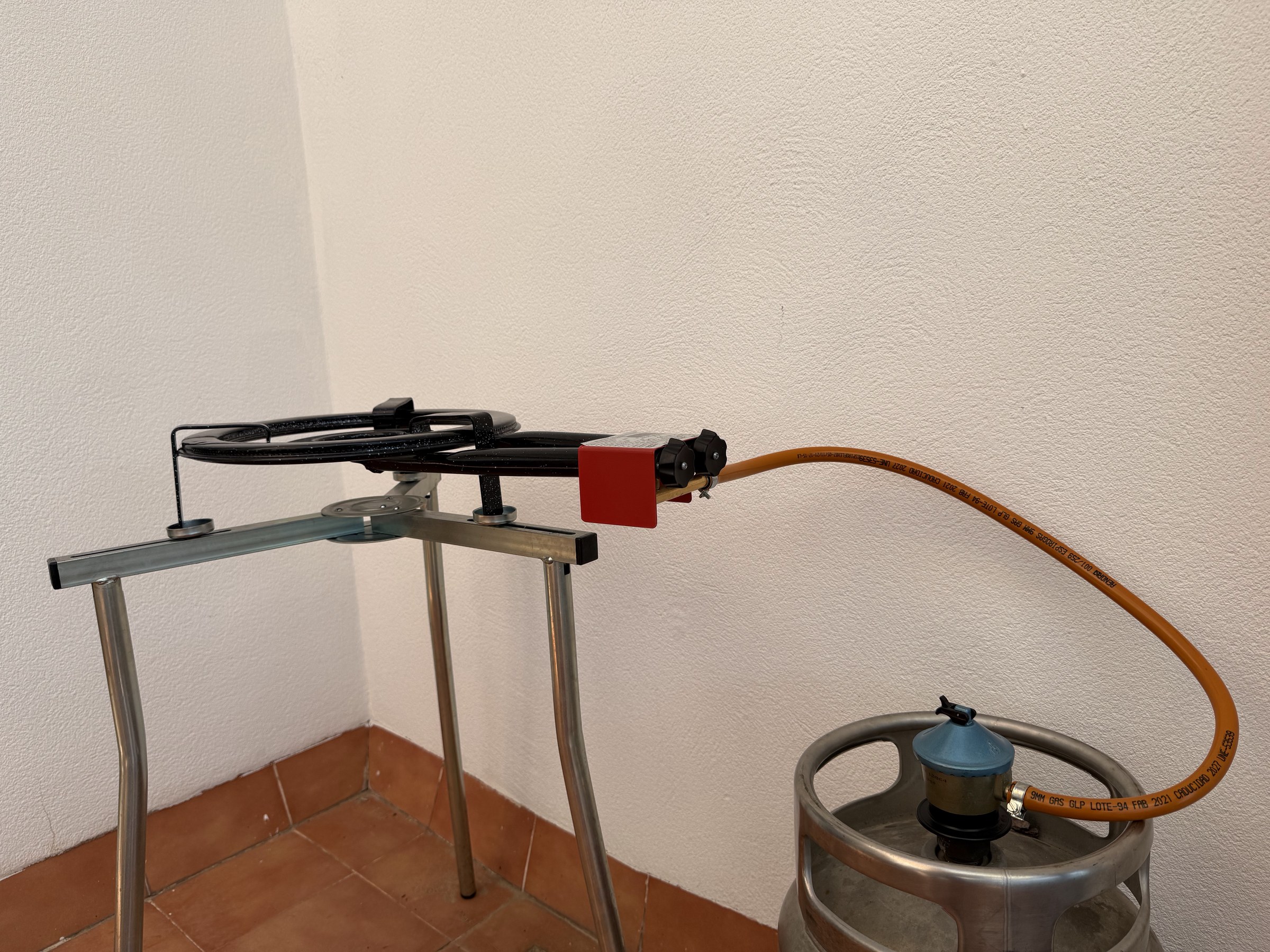
The paella burner
Next, I set up the paella burner. I always check both burner rings before the pan goes on.
The right heat is crucial when making paella. During the different stages, you want to be able to turn the fire up or down quickly.
Also make sure the paella pan sits level on the burner. I check this by pouring the olive oil into the pan and seeing whether it stays nicely in the centre.
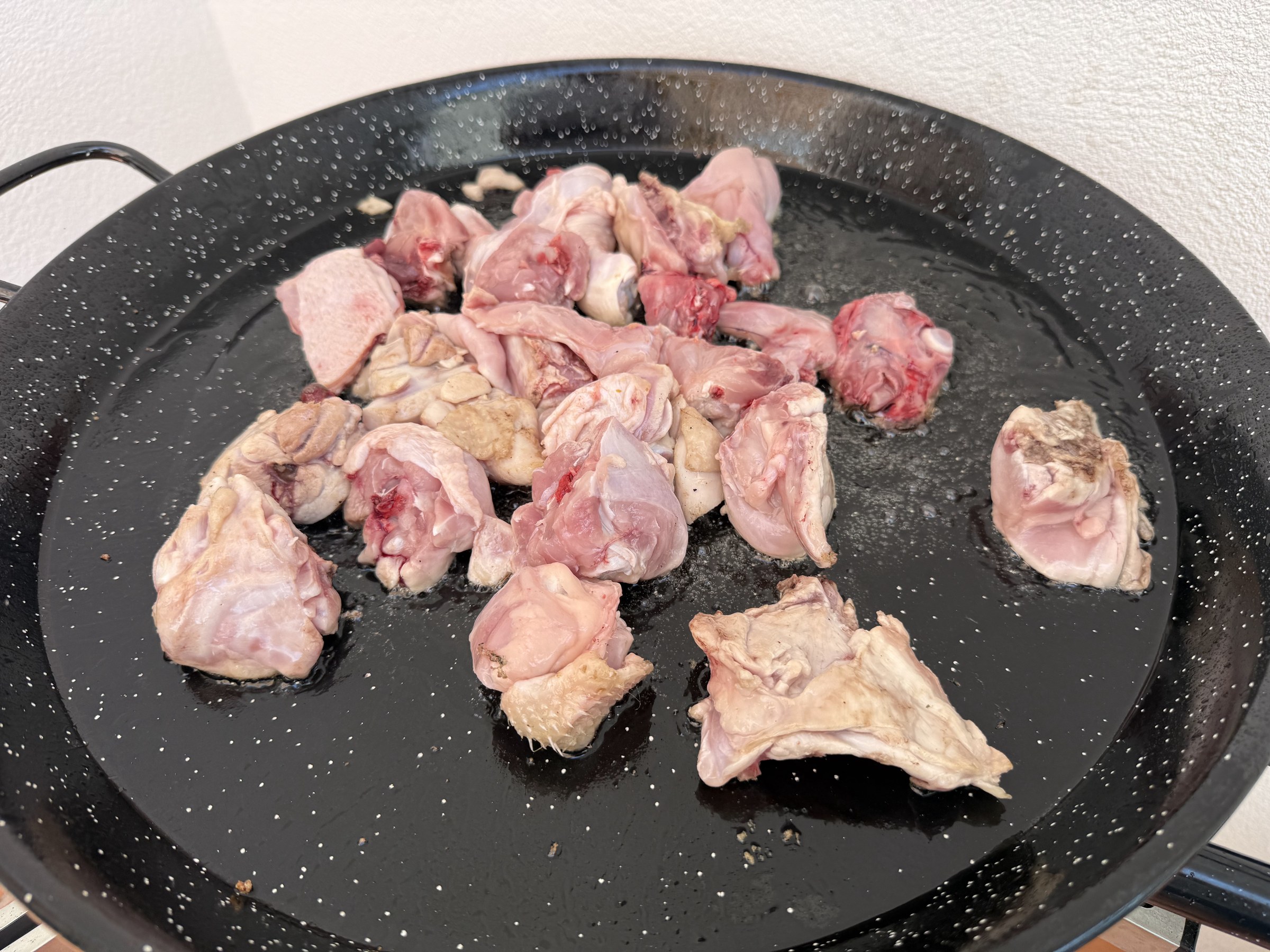
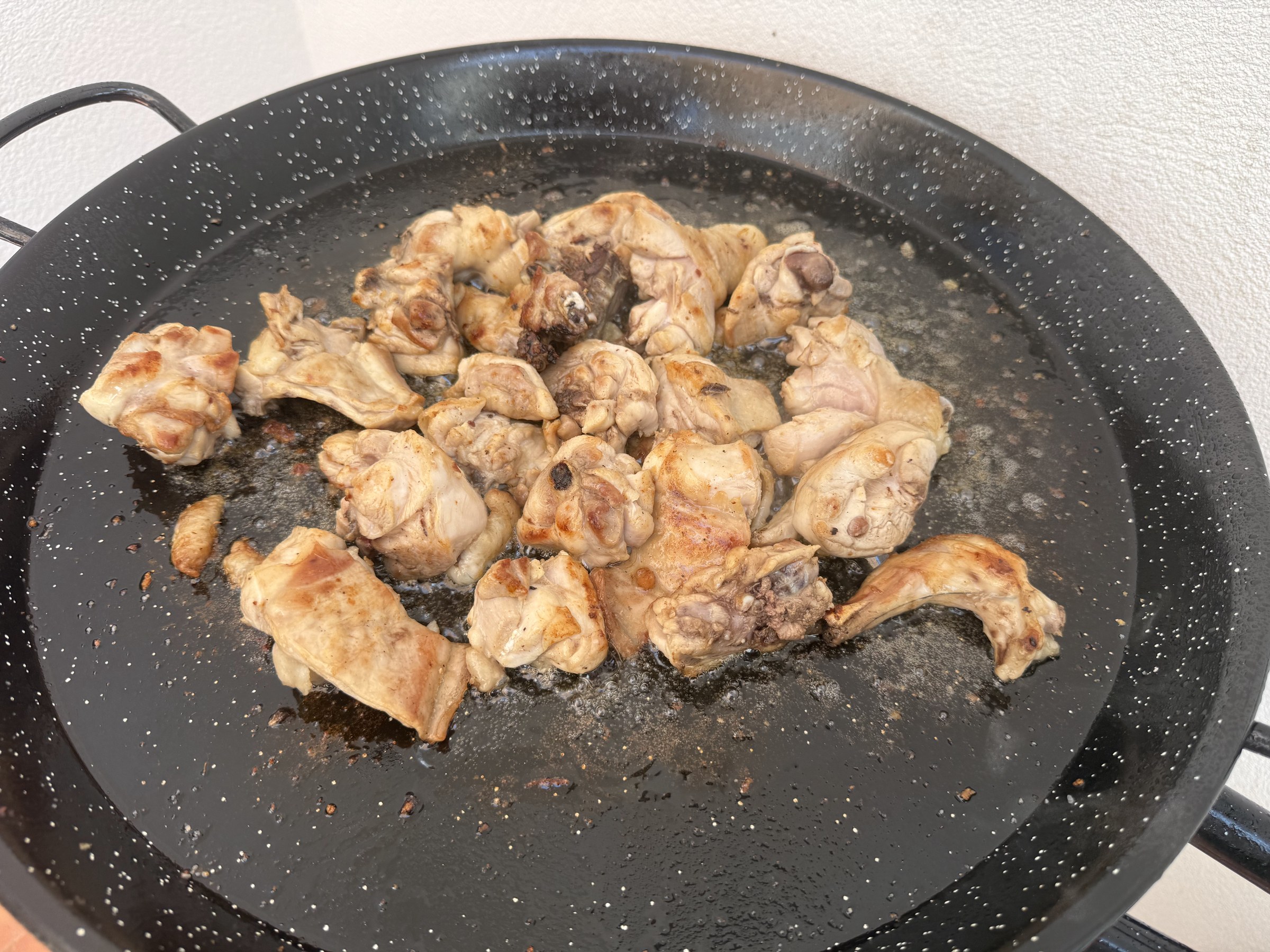
Browning the chicken and rabbit
Pour the olive oil into the pan and add the pieces of chicken and rabbit (still on the bone).
Fry the meat over medium to high heat and give it time. Allow about 20 to 25 minutes, so it browns nicely all over.
Don't rush it. This is where the flavour of your paella begins.
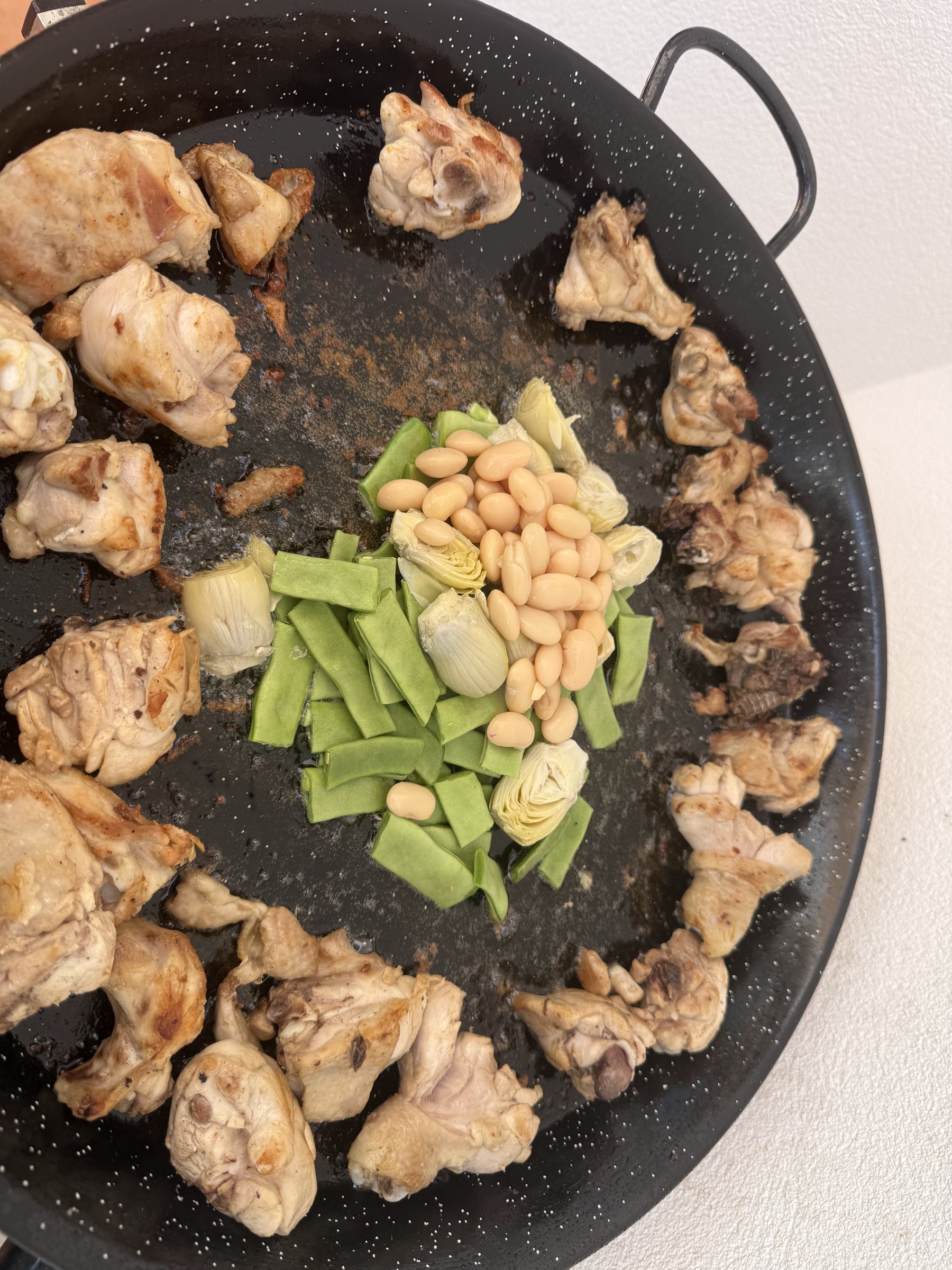
Adding the vegetables
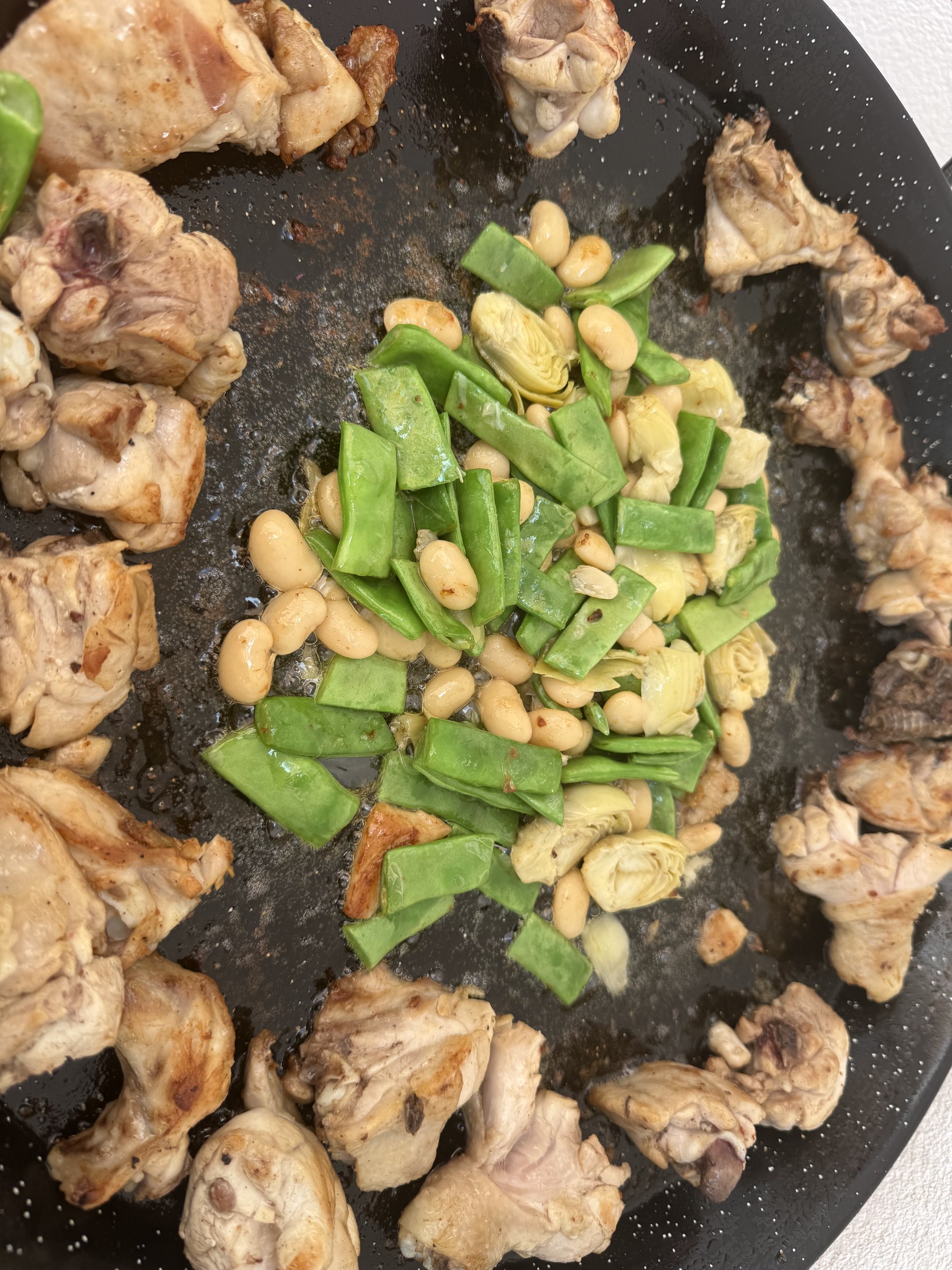
Push the meat to the outside of the pan and add the vegetables in the middle.
Fry them for about 5 minutes, until the vegetables also start to take on some colour.
Time for the tomato
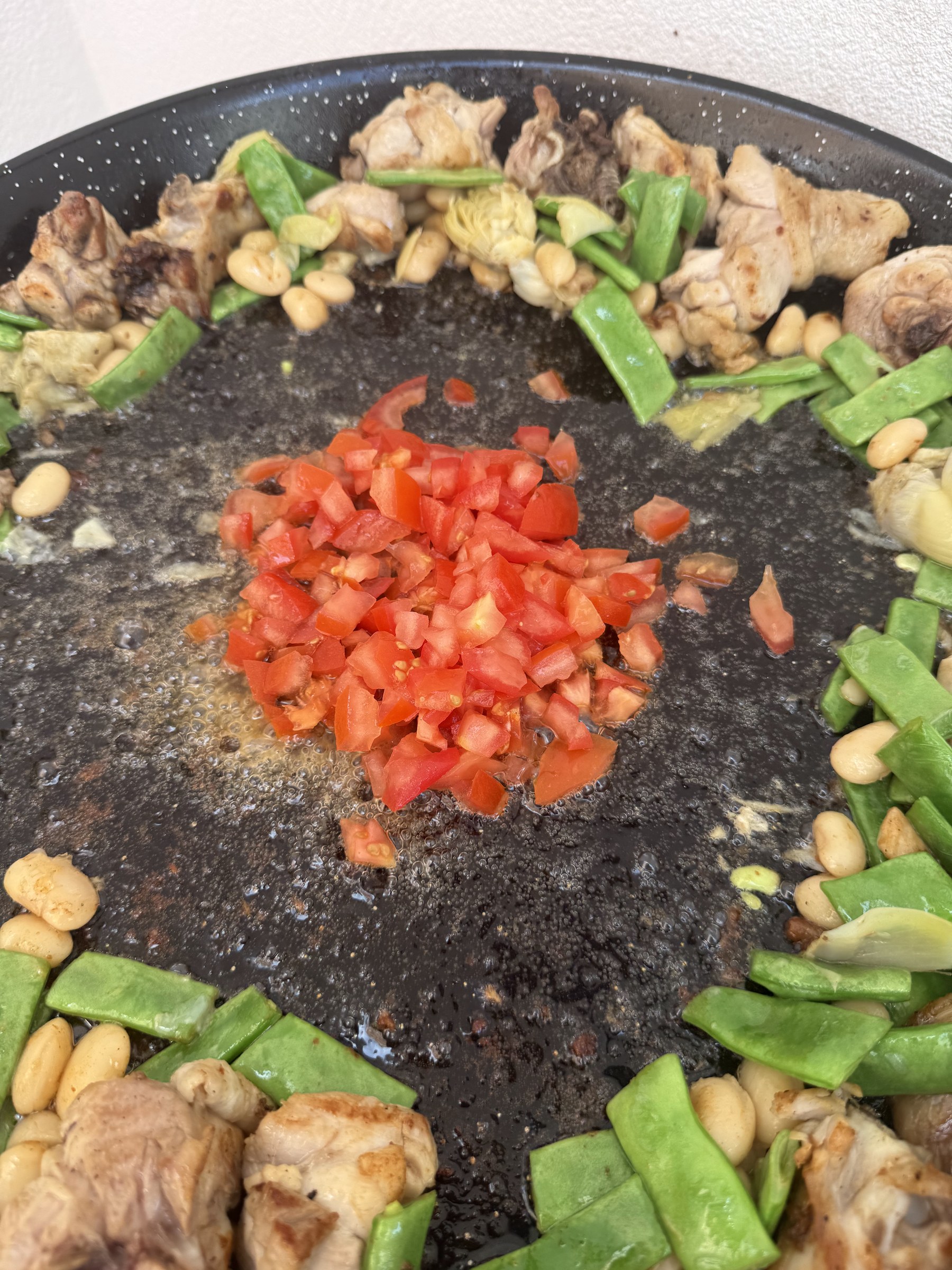
Push the vegetables to the side as well and add the tomato.
Strictly speaking, the tomatoes should be peeled, but to be honest I usually just leave the skin on.
Fry the tomato well in the olive oil and all the juices that are now in the pan.
Paprika: pay attention now
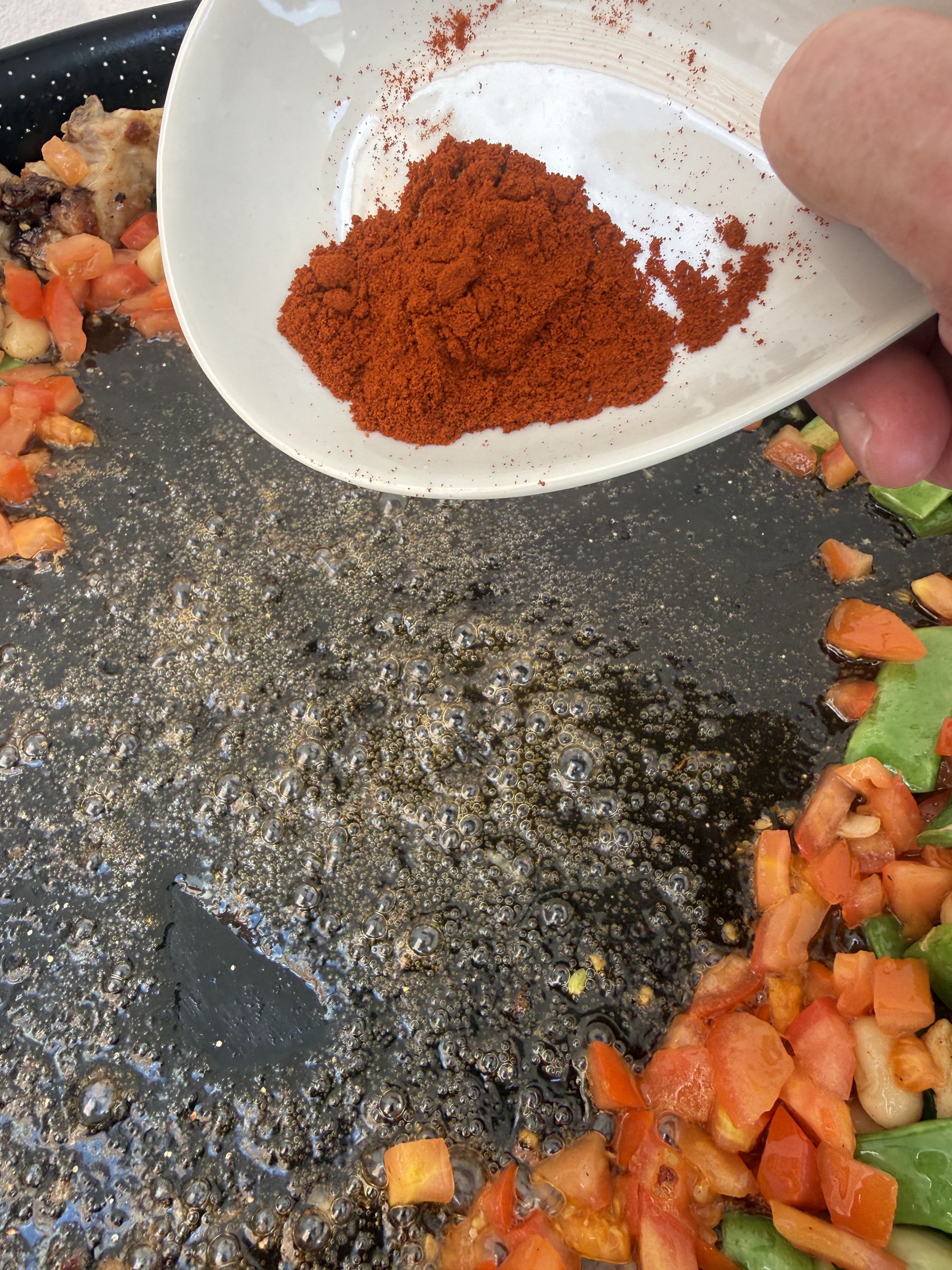
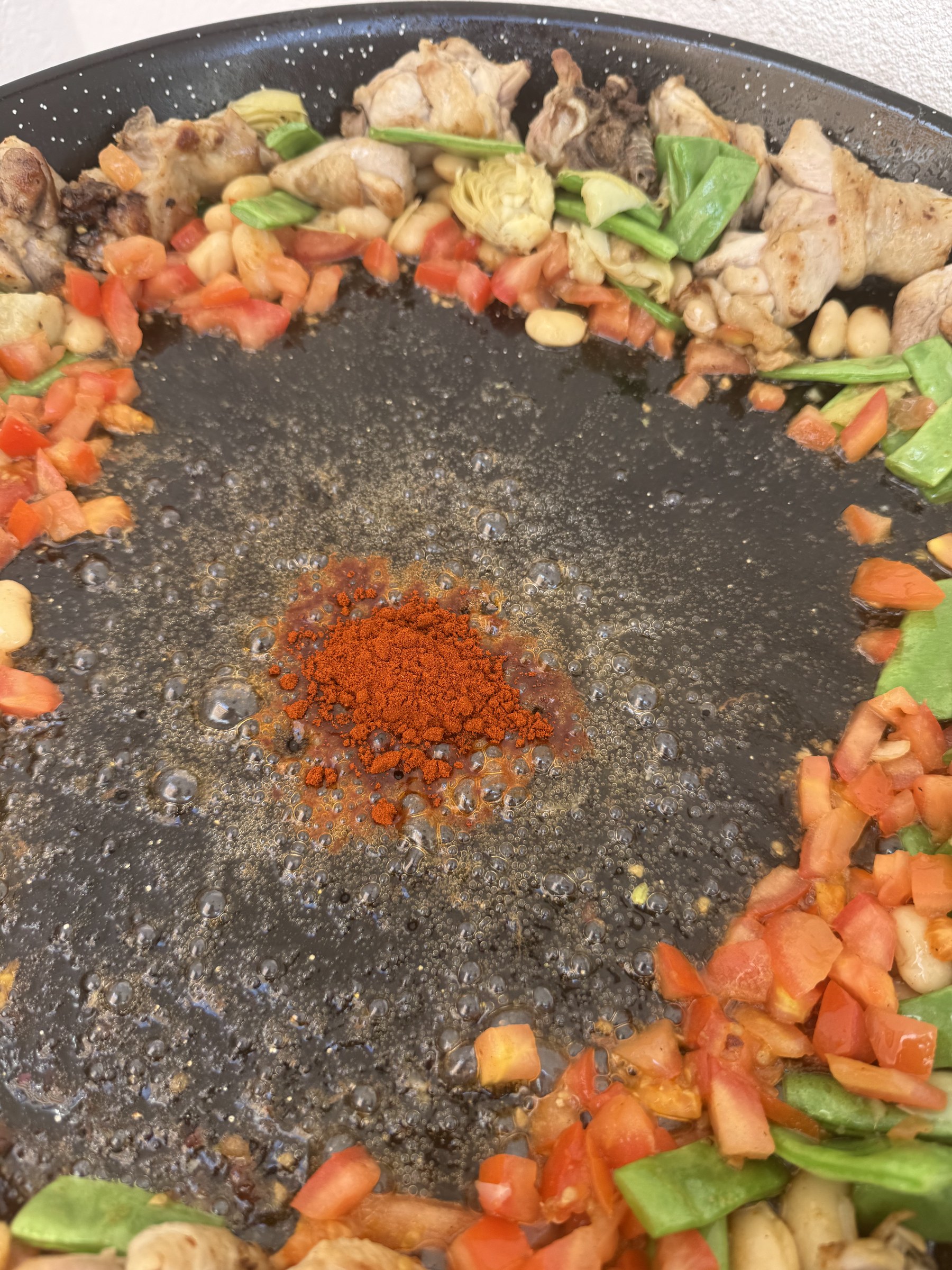
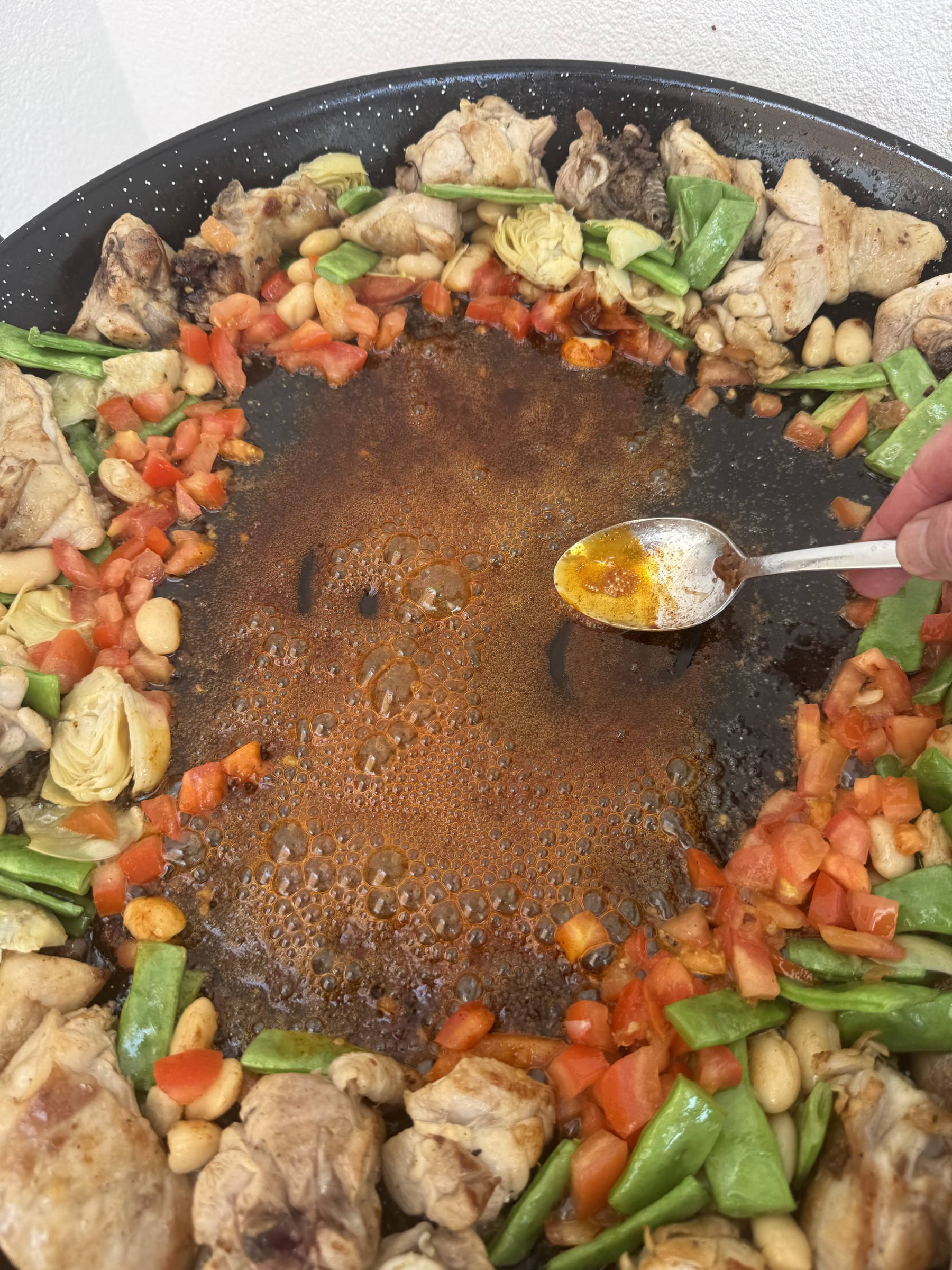
Add the sweet paprika and quickly stir it through the olive oil and the juices in the pan.
Let it caramelise briefly, but don't wait too long before adding the water. Paprika burns easily, and then it turns bitter.
Now we make the stock
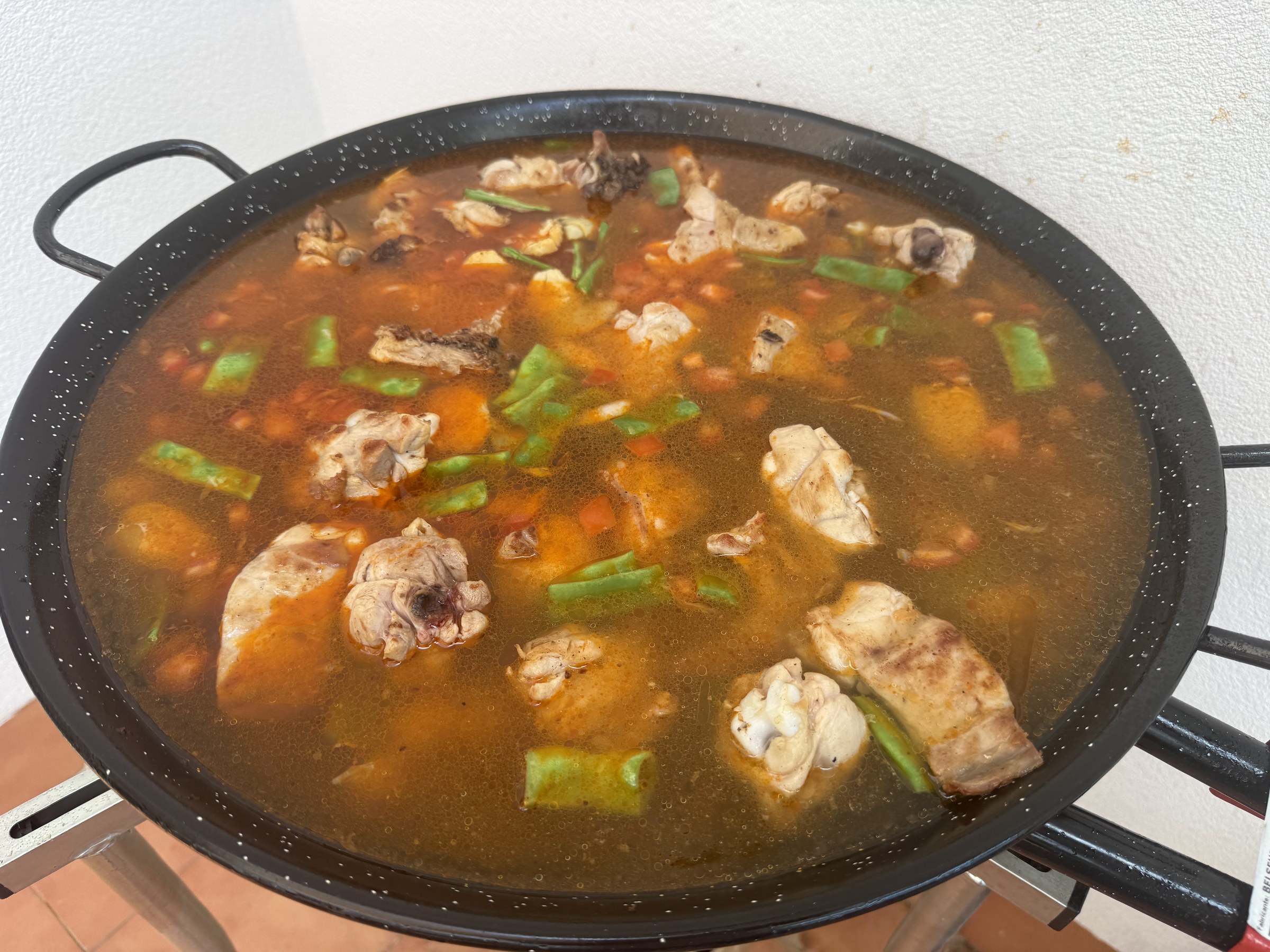
Add the water. And yes: that's quite a lot.
For about 500 grams of rice I use around 2.5 to 3 litres of water. That may seem excessive, but a large part of it will still evaporate.
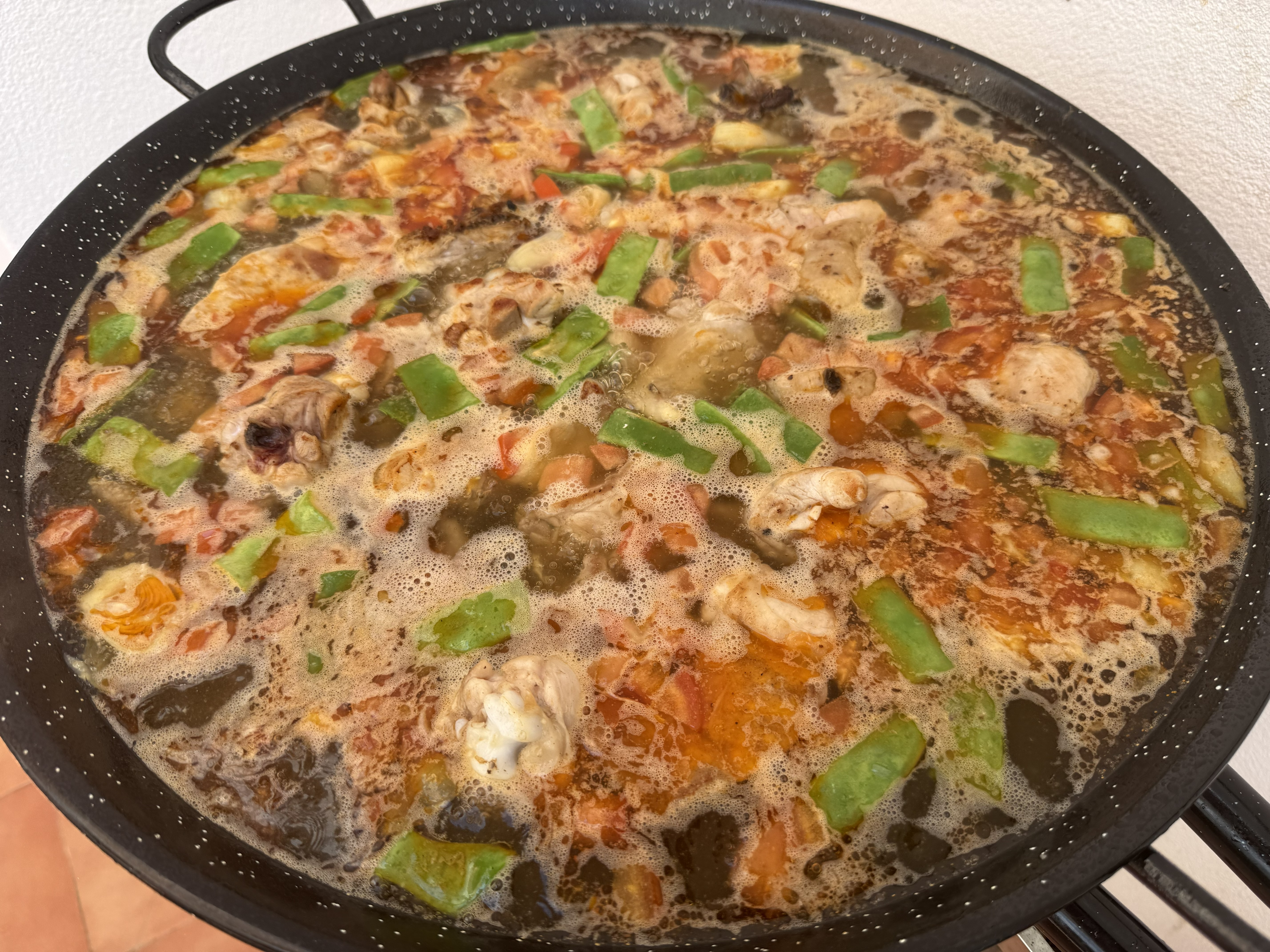
Now let it all simmer gently for about 25 minutes.
This is an important stage: the water takes on the flavours of the chicken, the rabbit, the vegetables and everything we've built up in the pan. In effect, we're making our stock right in the paella pan.
In goes the rice
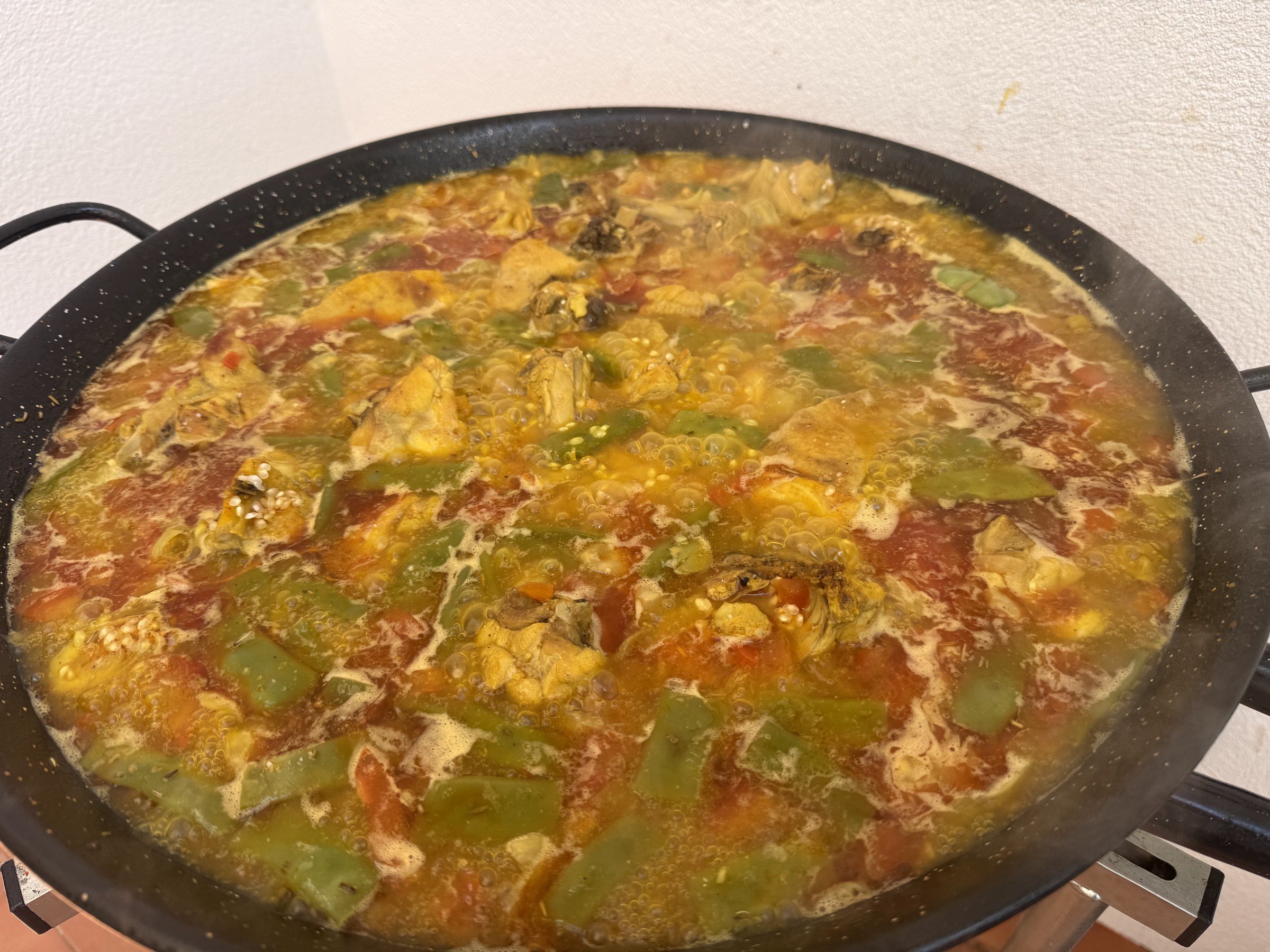
Once the stock has been boiling for about 25 minutes, the rice can go in.
Spread the rice as evenly as possible over the whole pan. I use Bomba rice for this: the typical short, round Spanish grain that can absorb a lot of the stock and therefore a lot of flavour.
First let the rice cook for about 8 minutes on high heat, then for about another 8 minutes on low heat.
This time it turned out just right. If the liquid has disappeared while the rice isn't cooked yet, you can add a little more water.
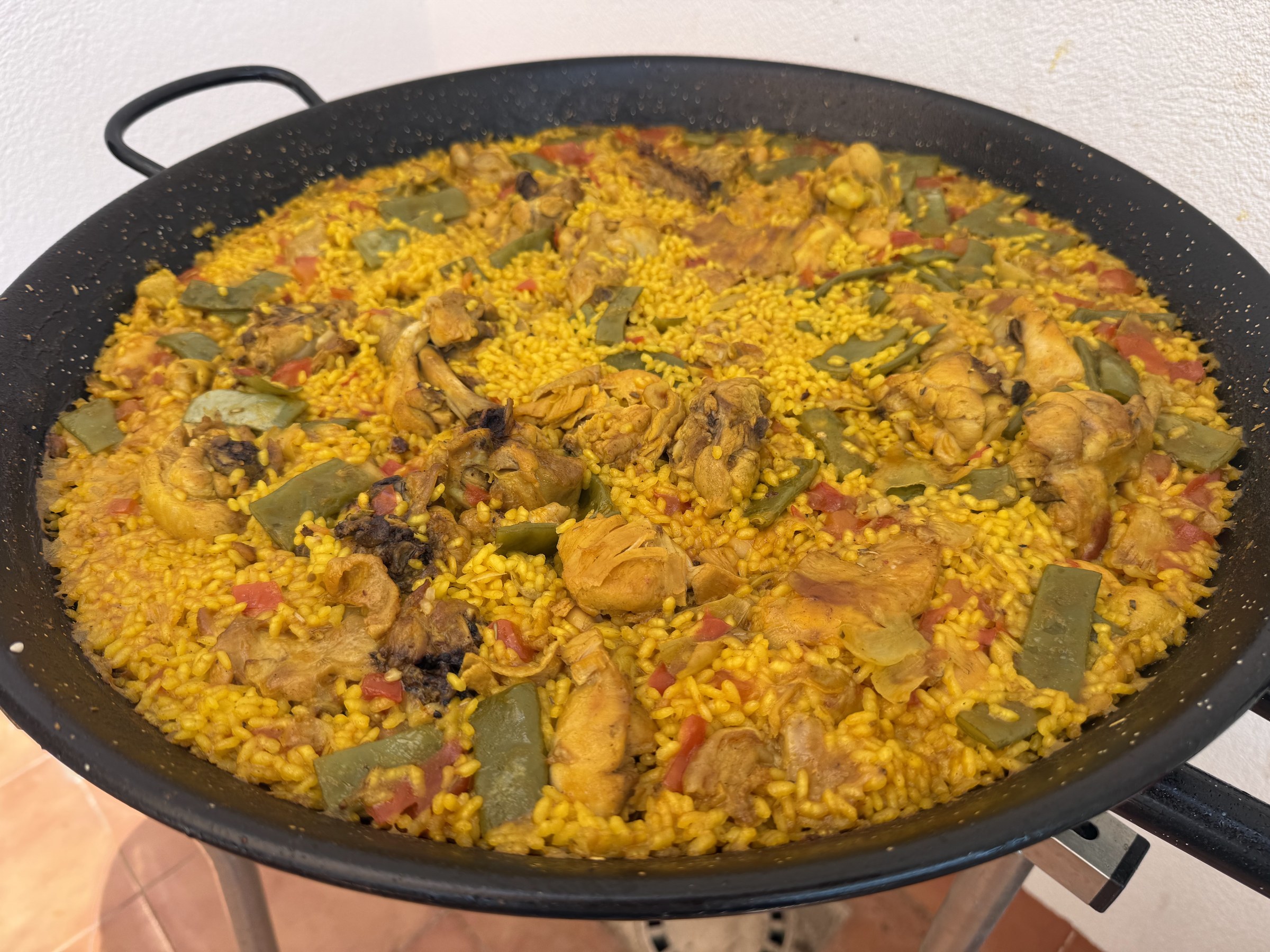
Patience…
Heat off.
And now, above all, do nothing for a while.
Let the paella rest for at least 5 minutes. Ten minutes is fine too.
That resting time is part of it and gives the rice the chance to settle nicely.
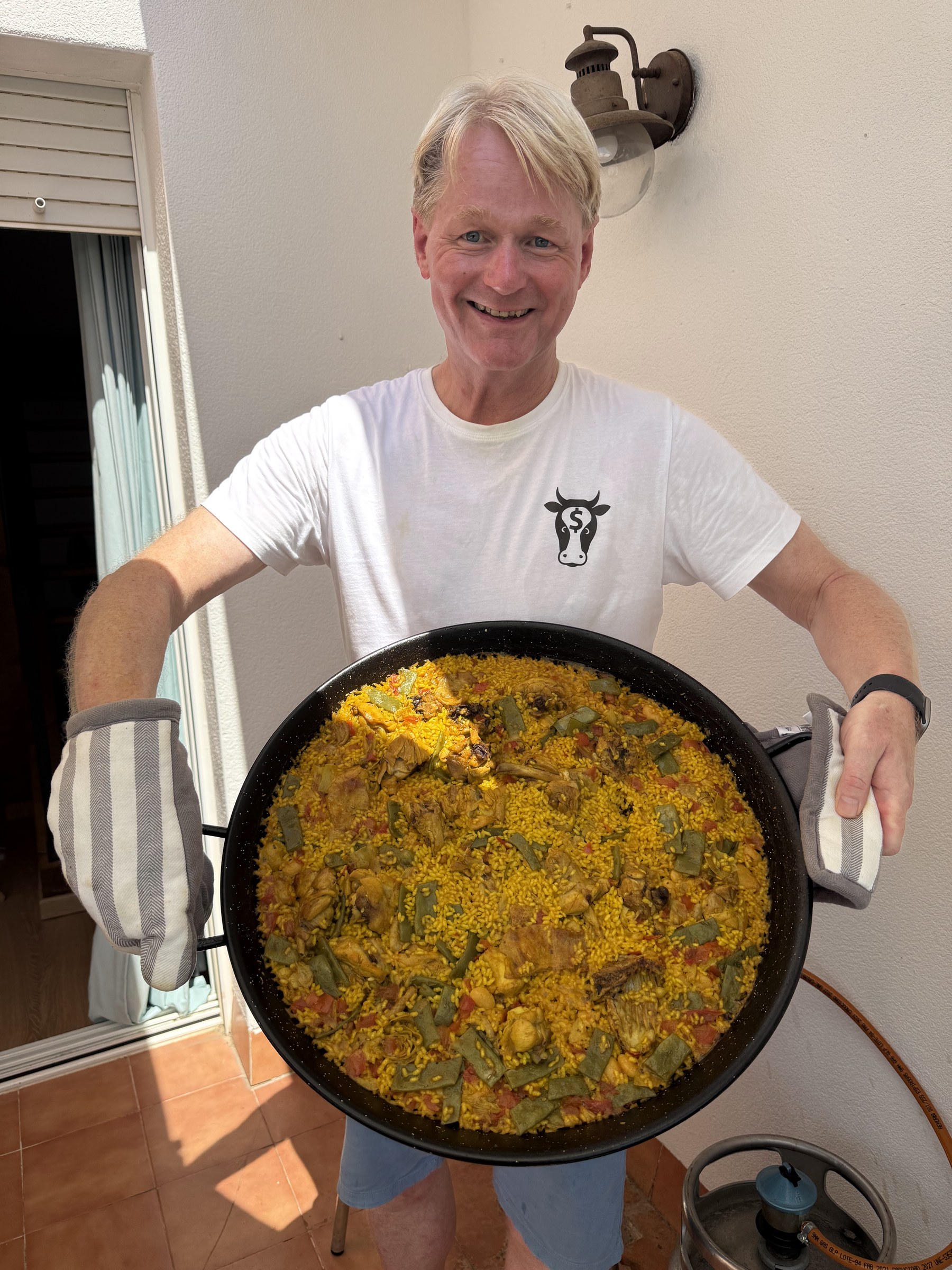
¡Buen provecho!
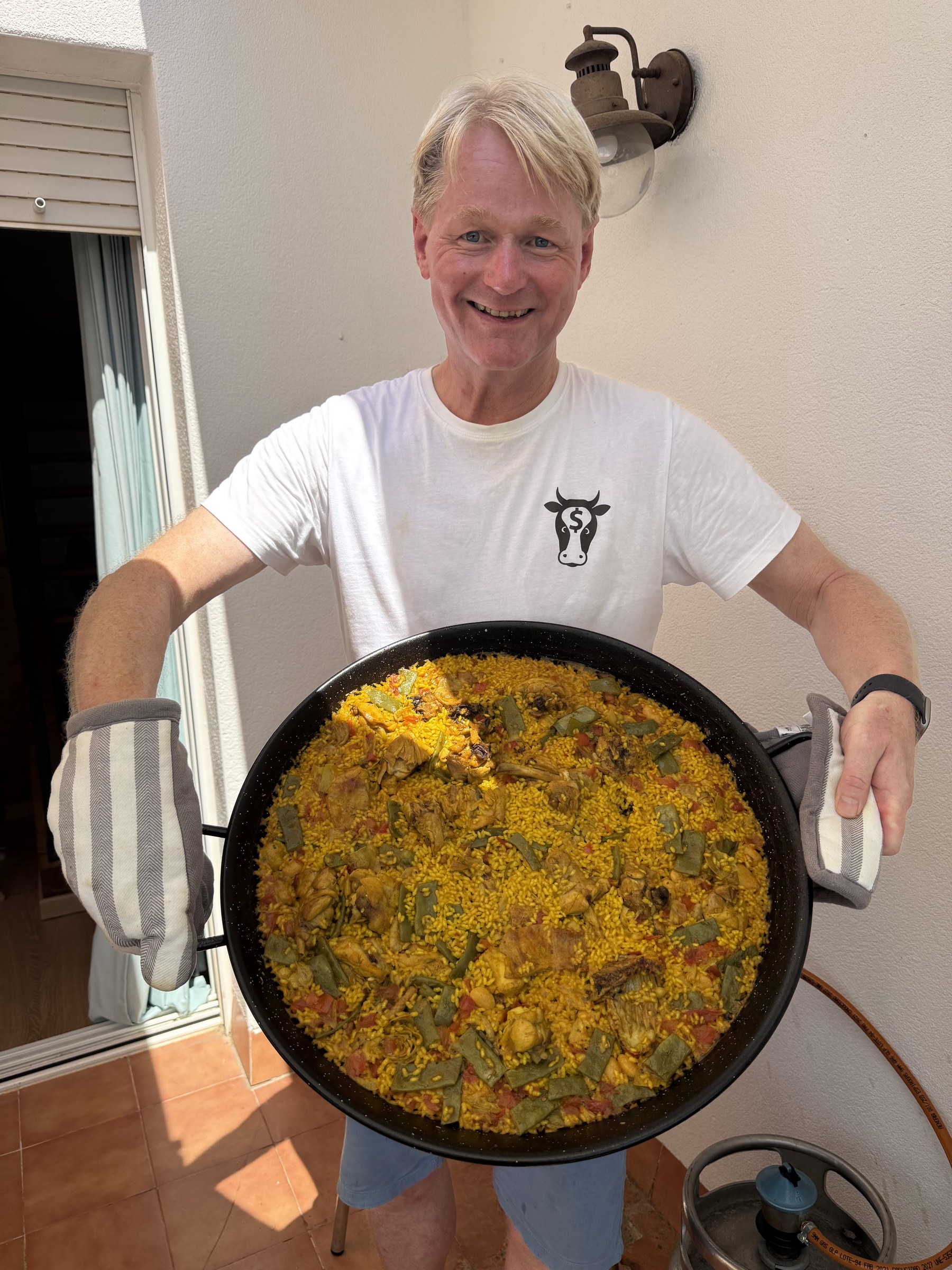
And the paella is ready.
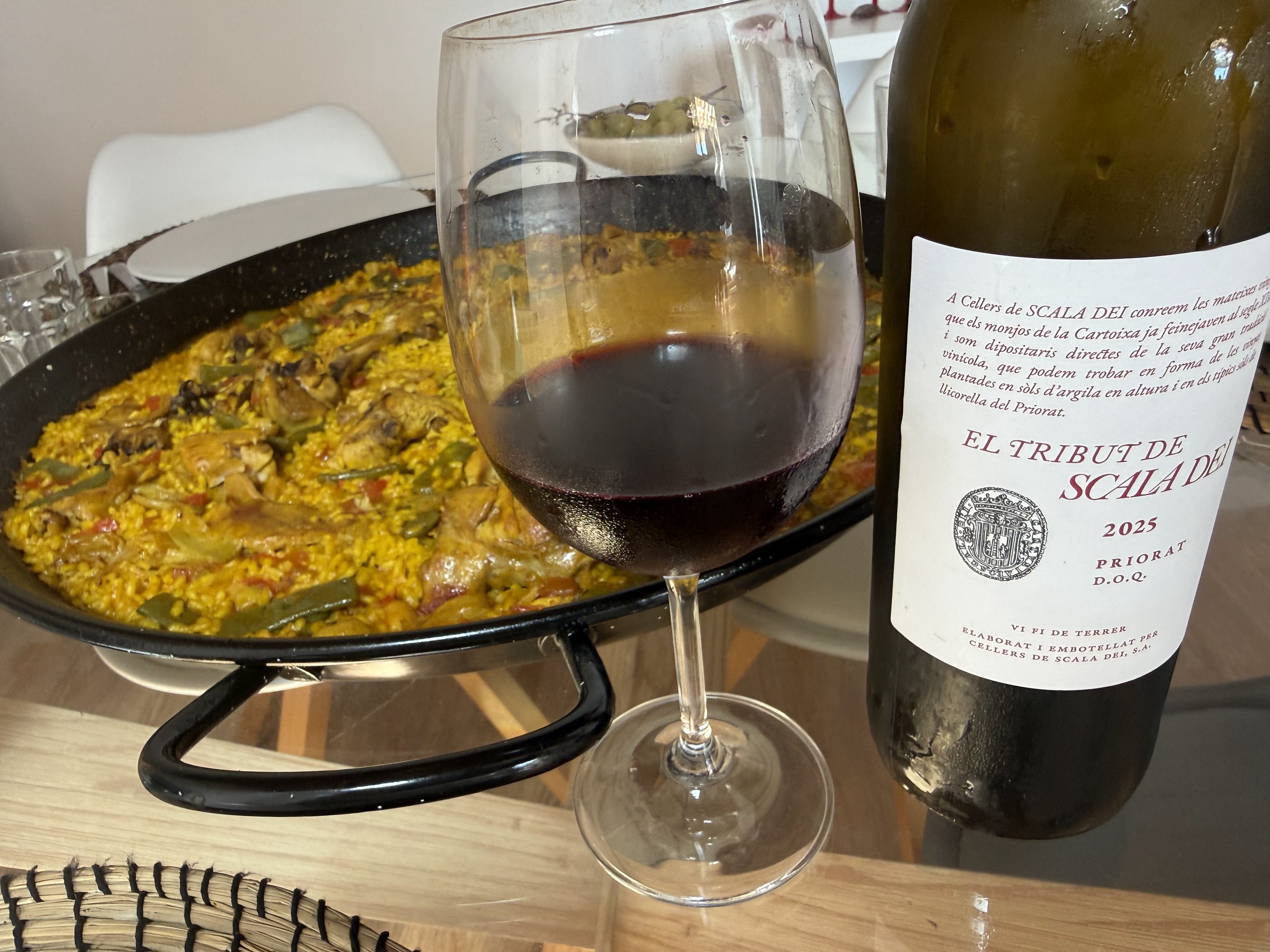
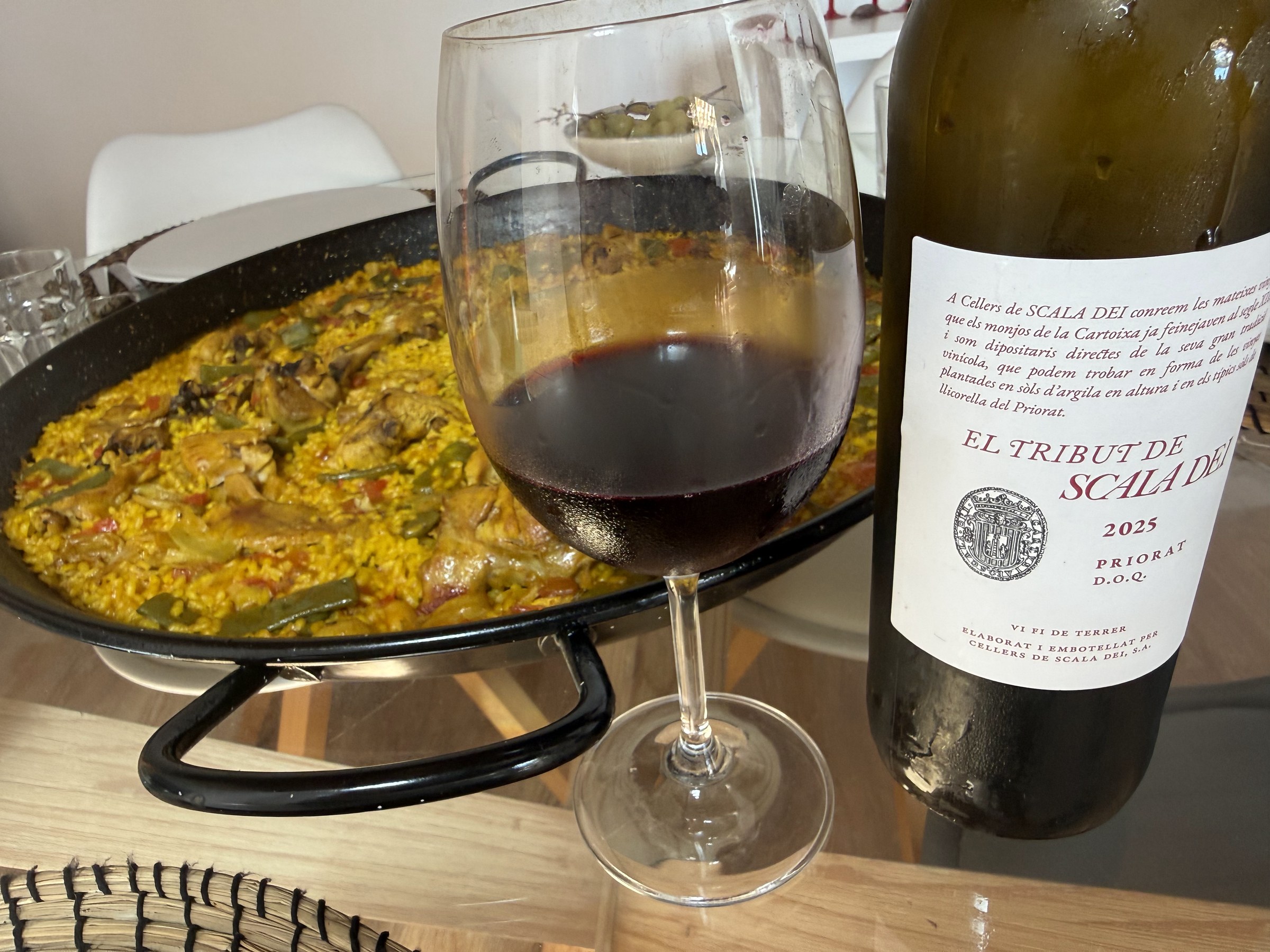
Then there's really only one thing missing: a good wine. This time we opened a beautiful Priorat, from the hinterland here near Tarragona.
Traditionally, paella is eaten together, straight from the pan, each with your own spoon. But of course you can also neatly serve it on your own plate.
The most important thing is that you enjoy it together.